

Some albums become hits.
Some albums become classics.
And then there are the albums that seem to become part of the furniture of popular culture. You hear the opening notes and immediately know the song. You see the cover and remember exactly where you were when you first heard it. Maybe you bought the vinyl. Maybe you owned the cassette. Maybe you wore out the CD.
These aren’t simply successful records.
They’re cultural landmarks.
And when you look at the biggest-selling albums in music history, one thing becomes obvious: there isn’t just one formula for making a monster album. Country can do it. Hard rock can do it. Progressive rock can do it. Disco can do it. Soundtracks can do it.
And pop?
Well, Michael Jackson pretty much rewrote the rulebook.
So let’s take a trip through music history and count down the 10 best-selling albums of all time, ranked by reported worldwide sales, the size of their audiences, their iconic songs, and the lasting impact they’ve had on popular culture.
One quick note before we start: worldwide album-sales numbers aren’t as precise as today’s streaming statistics. Different organizations and publications use different methodologies, and some figures represent reported worldwide sales while others reflect certifications or equivalent units. Guinness World Records currently recognizes Thriller as the world’s best-selling album, with estimates exceeding 67 million copies.
With that out of the way, let’s get started.
Number 10 — Bat Out of Hell — Meat Loaf
There are plenty of ways to describe Meat Loaf’s Bat Out of Hell.
“Normal” isn’t one of them.
Released in 1977, the album sounded like somebody had taken rock music, Broadway theater, teenage melodrama, oversized guitar riffs and a little bit of madness and thrown them into the same room.
Then they turned the volume all the way up.
Produced by Todd Rundgren and built around songs written by Jim Steinman, Bat Out of Hell was gloriously excessive. The songs weren’t simply songs. They were productions.
And that’s precisely what made the album so unforgettable.
“Paradise by the Dashboard Light” wasn’t just a track you listened to. It was practically a miniature rock opera. “Two Out of Three Ain’t Bad” showed another side of Meat Loaf’s enormous voice, while the title track announced from the beginning that this wasn’t going to be an ordinary rock album.
The strange thing is that Bat Out of Hell didn’t become an overnight sensation everywhere.
It grew.
And grew.
And grew.
Decades later, it remains one of the best-selling albums ever released, with reported worldwide sales generally placed around the 40-million-plus range, with some estimates reaching higher.
That’s an extraordinary achievement for an album that essentially refused to behave like anything else.
Number 9 — Come On Over — Shania Twain
By the time Shania Twain released Come On Over in 1997, country music was already changing.
But Shania didn’t just ride the change.
She helped accelerate it.
Come On Over was country music with the doors thrown wide open. There were guitars, fiddle, pop hooks, big choruses and songs that could work just as well on a country station as they could on mainstream pop radio.
And the songs?
They were everywhere.
“Man! I Feel Like a Woman!” became an anthem. “You’re Still the One” showed the romantic side of Twain’s songwriting. “From This Moment On” became a wedding favorite. “That Don’t Impress Me Much” added attitude and humor.
This was country music that didn’t ask permission to cross over.
It simply crossed over.
And crossed over again.
And again.
Come On Over became the best-selling studio album by a female artist in many historical sales rankings and is widely recognized as the best-selling country album ever, with reported worldwide sales around 40 million.
Think about what that means.
A country album became one of the biggest-selling albums in the entire history of recorded music.
That’s not just commercial success.
That’s cultural reach.
Number 8 — Rumours — Fleetwood Mac
Here’s the funny thing about Rumours.
The album sounds beautiful.
The story behind it was anything but.
When Fleetwood Mac entered the studio to make the follow-up to their enormously successful self-titled album, relationships within the band were falling apart.
Christine McVie and John McVie were divorcing.
Stevie Nicks and Lindsey Buckingham were ending their relationship.
Mick Fleetwood’s marriage was also collapsing.
And somehow, all of that emotional wreckage became one of the greatest albums ever recorded.
“Dreams” feels almost effortless. “Go Your Own Way” sounds like heartbreak with a guitar attached. “The Chain” has become one of the band’s defining recordings.
But Rumours wasn’t successful simply because the members were fighting.
It was successful because those tensions were transformed into extraordinary songwriting and performances.
The result was an album that could feel intimate one moment and enormous the next.
Released in 1977, Rumours eventually became one of the best-selling albums in music history, with reported worldwide sales around 40 million copies.
And here’s the part I love.
People who weren’t even alive when Rumours was released continue to discover it.
That’s how you know you’ve made something special.
Number 7 — Saturday Night Fever Soundtrack
For a moment in the late 1970s, disco wasn’t just popular.
It was everywhere.
And if there was one soundtrack that captured the phenomenon, it was Saturday Night Fever.
The movie starred John Travolta as Tony Manero, a young Brooklyn man whose life revolved around the disco floor.
But the soundtrack became something even bigger.
The Bee Gees supplied the heartbeat.
“Stayin’ Alive.”
“Night Fever.”
“How Deep Is Your Love.”
Those songs weren’t simply movie songs. They became defining recordings of the disco era.
And the soundtrack went far beyond the Bee Gees. It brought together music from artists including Yvonne Elliman, Kool & the Gang, Tavares and others.
The album became a phenomenon, selling tens of millions of copies worldwide.
What makes Saturday Night Fever particularly fascinating is how completely it captured a specific cultural moment.
The clothes.
The dance floors.
The nightlife.
The sound.
The attitude.
You can hear the opening pulse of “Stayin’ Alive” today and immediately you’re transported back to the disco era.
Very few soundtracks have ever accomplished that.
Number 6 — Hotel California — Eagles
There are albums that sell millions.
Then there are albums where one song becomes so famous that it essentially becomes shorthand for an entire band.
That’s Hotel California.
The Eagles released the album in 1976, and its title track became one of the most recognizable recordings in rock history.
Those opening guitar notes.
That mysterious atmosphere.
That long, unforgettable guitar outro.
“Hotel California” wasn’t a conventional pop song. It was mysterious, cinematic and open to interpretation.
And the album didn’t stop there.
“New Kid in Town” became a major hit. “Life in the Fast Lane” showed the harder edge of the Eagles. The album also demonstrated why the group had become one of America’s most successful rock bands.
Hotel California eventually became one of the best-selling albums in the world, with reported sales exceeding 40 million copies.
The Eagles would actually appear twice on this list.
That’s impressive.
But their second entry is even more remarkable.
Number 5 — The Dark Side of the Moon — Pink Floyd
Some albums are hits.
The Dark Side of the Moon is an experience.
Released in 1973, Pink Floyd’s masterpiece took the album format and treated it almost like a single piece of music.
Time.
Money.
Death.
Greed.
Pressure.
Madness.
The passing of life.
These weren’t exactly lightweight topics for a rock album.
But Pink Floyd wrapped those ideas inside incredible production, atmospheric soundscapes and songs that still sound remarkably modern.
“Money” became a radio staple.
“Time” opened with those famous clocks before launching into one of the album’s most powerful moments.
“Us and Them” slowed everything down and reminded listeners that Pink Floyd could be just as effective when whispering as when roaring.
And then there was the album itself.
The transitions.
The sequencing.
The sound.
The cover.
Everything worked together.
That’s one reason The Dark Side of the Moon became far more than a collection of songs. It became an album in the truest sense of the word.
Reported worldwide sales are generally placed at roughly 45 million copies, making it one of the best-selling albums ever.
But sales don’t tell the entire story.
Its influence on recording, production and album-oriented rock may be even more important than the number on the sales chart.
Number 4 — Their Greatest Hits (1971–1975) — Eagles
Now here’s where things get interesting.
Usually, when people talk about the biggest-selling albums in music history, they talk about original studio albums.
The Eagles broke that pattern.
Their Greatest Hits (1971–1975) was a compilation.
And it became a monster.
Released in 1976, the album gathered some of the Eagles’ biggest recordings from their early years, including “Take It Easy,” “One of These Nights” and “Best of My Love.”
For someone discovering the Eagles years later, this was practically the perfect introduction.
No digging through albums.
No searching for singles.
The hits were all right there.
And people bought it.
Lots of people.
In January 2026, Guinness World Records reported that the album had been certified by the RIAA at 40 million copies in the United States, making it the first album to receive the RIAA’s quadruple-Diamond certification.
That’s an astonishing American sales achievement.
Worldwide estimates place the album even higher in many historical rankings.
And there’s something almost poetic about it.
The Eagles made one of the most commercially successful albums in history by simply collecting songs they had already recorded.
Sometimes the greatest hits really are the greatest hits.
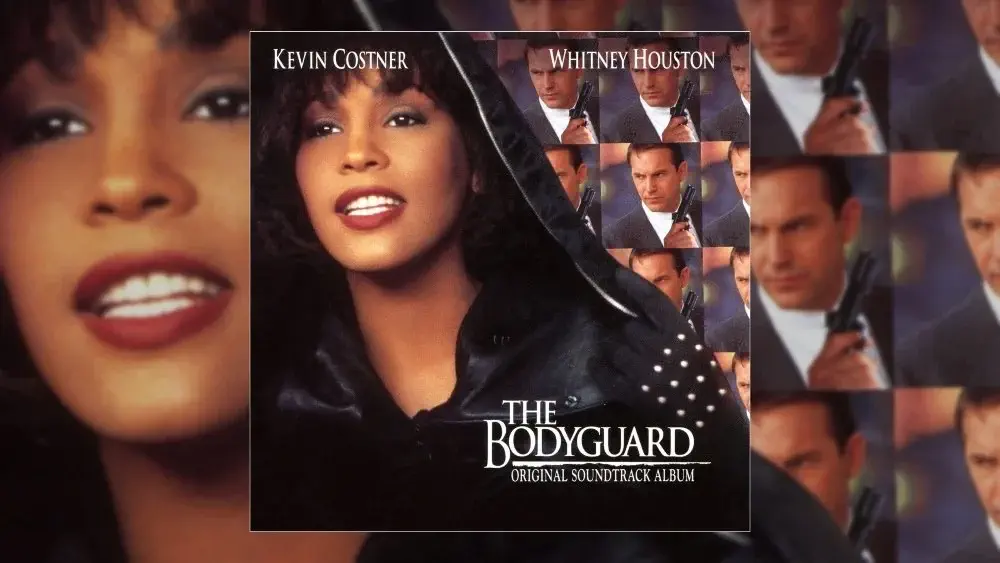
Number 3 — The Bodyguard Soundtrack
In 1992, Whitney Houston didn’t simply appear in a movie.
She owned the soundtrack.
The Bodyguard paired Houston with a collection of songs that became enormous worldwide hits, but there was one recording that towered above everything else.
“I Will Always Love You.”
Originally written and recorded by Dolly Parton, Whitney’s version transformed the song into a vocal showcase that became one of the defining performances of her career.
And that’s saying something.
Houston’s voice had always been extraordinary, but on “I Will Always Love You,” she demonstrated the combination of restraint, power and emotional control that made her one of the greatest singers of her generation.
The soundtrack became a global phenomenon.
“I Have Nothing.”
“Run to You.”
“I’m Every Woman.”
And, of course, “I Will Always Love You.”
The album eventually sold more than 40 million copies worldwide, with many historical estimates placing it around 45 million.
It also became one of the most successful movie soundtracks ever released.
More importantly, it demonstrated the enormous commercial power of a soundtrack when the right artist, songs and movie collide at exactly the right moment.
Number 2 — Back in Black — AC/DC
Now we’re getting into rare territory.
Imagine losing your lead singer.
Imagine wondering whether your band can continue.
Then imagine responding by making one of the biggest-selling rock albums in history.
That’s exactly what AC/DC did.
Bon Scott died in February 1980.
The band could have called it quits.
Instead, they recruited Brian Johnson and returned with Back in Black.
And they came back loud.
Really loud.
The opening of “Hells Bells” announced that AC/DC had no intention of quietly stepping aside.
Then came “Shoot to Thrill.”
“You Shook Me All Night Long.”
“Back in Black.”
The album was lean, aggressive and incredibly direct.
There was no need for complicated arrangements or musical gymnastics.
AC/DC understood the assignment.
Give people great riffs.
Give them a giant rhythm section.
Give them memorable choruses.
And turn the amplifiers up.
Back in Black eventually became one of the biggest-selling albums ever, with reported worldwide sales around 50 million copies.
But there’s another reason this album matters.
It wasn’t merely a commercial comeback.
It was a statement.
AC/DC had survived tragedy and returned with an album that became a tribute to Bon Scott and a declaration that the band wasn’t finished.
Quite the opposite.
They were just getting started.
Number 1 — Thriller — Michael Jackson
And then there is Thriller.
Released in November 1982, Michael Jackson’s sixth studio album didn’t just become successful.
It changed the definition of what a successful album could be.
Jackson brought together producer Quincy Jones, some of the finest musicians and songwriters in the business, and an extraordinary collection of songs.
The result was something almost impossible to duplicate.
“Billie Jean.”
“Beat It.”
“Thriller.”
“Wanna Be Startin’ Somethin’.”
“Human Nature.”
“P.Y.T.”
Even the songs that weren’t released as major singles helped create the feeling that this wasn’t simply an album.
It was an event.
And then MTV changed everything.
Jackson’s music videos weren’t promotional afterthoughts. They were productions.
“Billie Jean” helped establish Jackson as a visual superstar.
“Beat It” crossed musical boundaries.
And “Thriller,” directed by John Landis, essentially turned the music video into a cinematic experience.
Suddenly, an album wasn’t just something you heard.
It was something you watched.
Something you talked about.
Something you experienced.
Thriller ultimately became the best-selling album in music history.
Guinness World Records currently recognizes it as the world’s best-selling album, with estimated global sales exceeding 67 million copies.
Other sources commonly cite figures around 70 million or more.
Either way, the number is almost beside the point.
Because Thriller didn’t simply sell records.
It changed pop culture.
It helped erase boundaries between pop, rock, R&B and funk.
It turned Michael Jackson into a global superstar on a scale few artists have ever approached.
And perhaps most importantly, it created songs that never really left the culture.
You don’t have to be a Michael Jackson fan to recognize “Billie Jean.”
You don’t have to own the album to know “Beat It.”
You don’t even have to be old enough to remember 1982 to recognize the opening of “Thriller.”
That’s the real measure of an album’s legacy.
The Albums That Refused to Disappear
Look back at this list and something becomes clear.
These albums came from completely different musical worlds.
Meat Loaf gave us theatrical rock.
Shania Twain brought country into the pop mainstream.
Fleetwood Mac turned personal heartbreak into art.
The Bee Gees defined an era of disco.
The Eagles created a sound that became synonymous with American rock.
Pink Floyd made the album itself an experience.
Whitney Houston demonstrated the extraordinary power of a great voice.
AC/DC proved that hard rock could sell tens of millions of records.
And Michael Jackson created an album that became a global cultural phenomenon.
But there’s one thing they all have in common.
People kept listening.
That’s harder than it sounds.
Music history is full of successful albums that disappeared after a few years. A big debut doesn’t guarantee a lasting legacy. A number-one single doesn’t guarantee that anyone will remember the album decades later.
These records survived.
They survived changing musical tastes.
They survived new formats.
Vinyl became cassette.
Cassette became CD.
CD became digital downloads.
Downloads gave way to streaming.
And somehow, these albums kept finding new listeners.
That’s why the best-selling albums of all time aren’t merely numbers on a spreadsheet.
They’re snapshots of who we were.
They remind us of different decades, different fashions, different technologies and different versions of ourselves.
Maybe you bought Rumours on vinyl.
Maybe your parents had Hotel California in the record collection.
Maybe you wore out a cassette of Back in Black.
Maybe you watched Thriller on MTV.
Maybe you discovered The Dark Side of the Moon years after its release through a friend who insisted you listen to the entire album with the lights off.
That’s the magic of great music.
It doesn’t stay where you found it.
It follows you.
And decades later, these ten albums are still doing exactly what great music is supposed to do:
They make us listen.


