
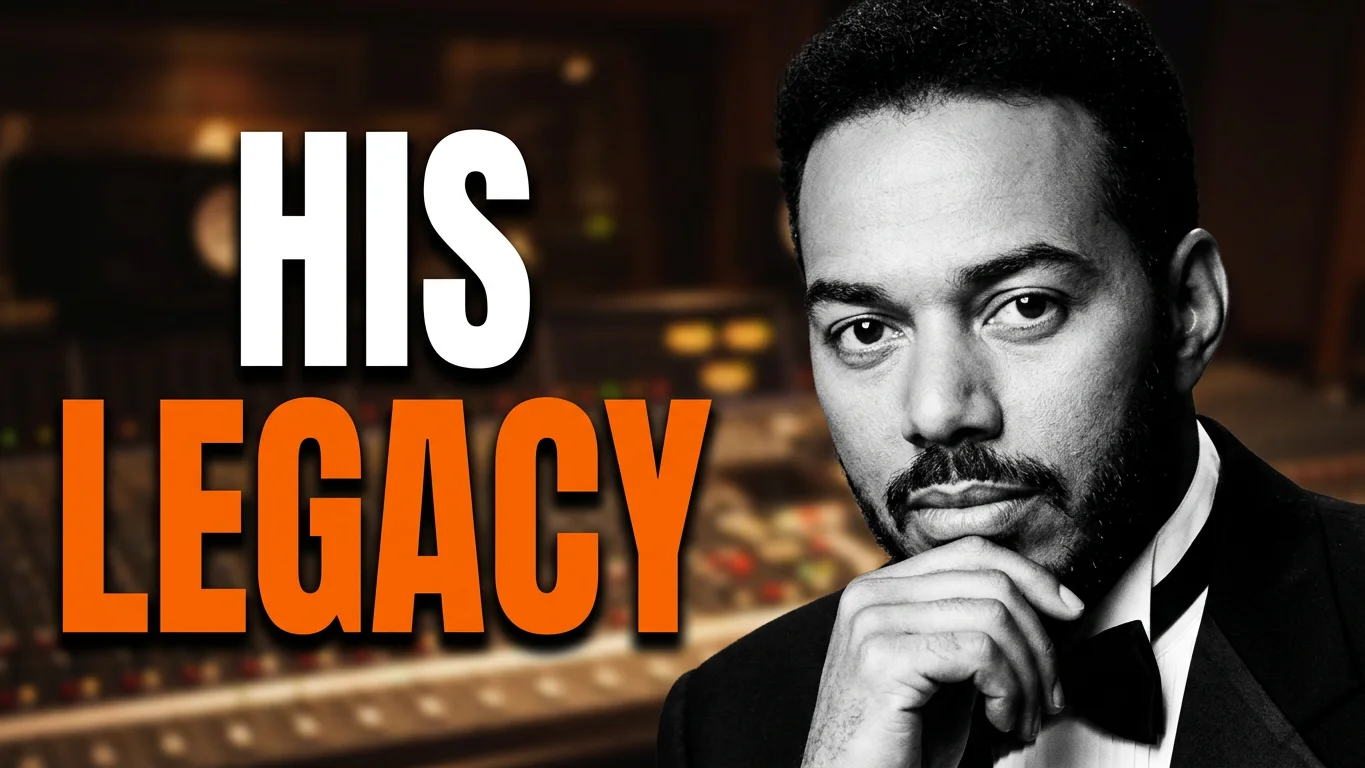

There are singers you remember for their range, singers you remember for their power, and singers you remember because their voice seems to reach somewhere deeper.
James Ingram was one of those singers.
He never needed to overpower a song. His voice had warmth, vulnerability and an almost conversational quality that made even the grandest productions feel personal. During the 1980s and early 1990s, Ingram moved effortlessly between R&B, pop, adult contemporary and soundtrack music, working with some of the biggest names in popular music while developing a sound that was unmistakably his own.
His career also carried a quiet sense of faith. Ingram was a man who understood that talent could be a gift, and there was a humility in the way he approached music that never seemed to disappear, even as his career took him into some of the most prestigious studios in the world.
Here are six recordings that capture the remarkable range of James Ingram.
“Just Once”
“Just Once” is where many listeners first discovered the extraordinary emotional power of James Ingram.
Written by Barry Mann and Cynthia Weil, the song appeared on Quincy Jones’ 1981 album The Dude. Ingram wasn’t yet a household name, but his performance immediately made it clear that Jones had found something special.
The song is about a relationship that keeps falling short of expectations. But Ingram doesn’t sing it like a man delivering a dramatic breakup speech. He sounds almost as if he’s thinking out loud, trying to understand how something that once felt so promising has gone wrong.
That’s what makes the performance so effective.
His voice rises and falls naturally, never pushing too hard. The production is sophisticated, but Ingram remains at the center of it. His Grammy-nominated performance helped establish him as one of the most distinctive new voices in R&B and pop.
There is a vulnerability in “Just Once” that became one of Ingram’s trademarks.
He didn’t simply sing the emotion.
He let you feel it.
“One Hundred Ways”
If “Just Once” introduced the world to Ingram’s emotional side, “One Hundred Ways” demonstrated just how naturally he could inhabit a sophisticated R&B production.
Also featured on The Dude, “One Hundred Ways” became a Top 20 pop hit and earned Ingram his first Grammy Award, for Best R&B Vocal Performance, Male.
The song is built around the idea that love isn’t maintained by grand gestures alone. Sometimes it’s the small things—the attention, the patience, the effort—that keep a relationship alive.
Ingram delivers that message with remarkable restraint.
His vocal doesn’t feel like a performance designed to impress. It feels like advice from someone who has learned something about love.
That quality was important to Ingram’s appeal. His music often dealt with complicated emotions, but he rarely made them sound complicated. He had a way of finding the human center of a lyric and letting the listener meet him there.
And behind that approach was a humility that seemed consistent with his faith: the understanding that the greatest gifts don’t always require the loudest presentation.
“Baby, Come to Me” — With Patti Austin
James Ingram and Patti Austin were almost unfairly good together.
“Baby, Come to Me,” written by Rod Temperton and produced by Quincy Jones, originally appeared on Austin’s 1981 album Every Home Should Have One. After the song was featured prominently on General Hospital, it became a massive pop hit and eventually reached No. 1 on the Billboard Hot 100.
But television exposure didn’t create the chemistry between Austin and Ingram.
That was already there.
The two singers sound as if they’re having a private conversation. Austin brings warmth and confidence, while Ingram answers with a gentler, more vulnerable delivery.
The magic is in what they don’t do.
Neither singer tries to dominate the other.
Ingram listens.
That may sound like a small thing, but it is one of the reasons the duet still feels intimate decades later. He understood that sometimes the most powerful vocal performance is the one that leaves room for another voice.
“Baby, Come to Me” became one of the signature romantic recordings of the era, but its appeal goes beyond nostalgia. The performances remain beautifully human.
“Yah Mo B There” — With Michael McDonald
Then there was the other James Ingram.
The one who could groove.
“Yah Mo B There,” recorded with Michael McDonald, couldn’t be more different from the melancholy of “Just Once.” Released in 1983, the song blended R&B, pop, gospel influence and polished Quincy Jones production into something energetic and uplifting.
It reached No. 19 on the Billboard Hot 100 and earned Ingram and McDonald a Grammy Award for Best R&B Performance by a Duo or Group with Vocal.
The title and spirit of the song are rooted in the assurance that God is present. That spiritual dimension gives the record an extra layer when you consider Ingram’s own faith.
But it never becomes heavy-handed.
The message is carried by the groove.
McDonald’s gritty blue-eyed soul contrasts beautifully with Ingram’s smoother voice, and the two create a record that feels both joyful and reassuring.
It also showed that Ingram couldn’t be boxed into the category of “ballad singer.”
He had soul.
He had rhythm.
And he knew how to have fun.
“Somewhere Out There” — With Linda Ronstadt
“Somewhere Out There” might have seemed like an unlikely James Ingram record.
The song came from the 1986 animated film An American Tail, and Ingram recorded it with Linda Ronstadt. Their version became a major hit, reaching No. 2 on the Billboard Hot 100.
Ronstadt brought her powerful pop and rock background. Ingram brought the warmth of R&B.
Together, they created something larger than either genre.
The song is essentially about separation, hope and the belief that somewhere, someone you love is looking toward the same sky. Ingram’s voice gives the song its emotional center.
He doesn’t oversing it.
He doesn’t need to.
There is something almost prayerful about the performance. The song’s message of hope, distance and faith in connection suited an artist whose own worldview was grounded in believing that there was something larger than himself.
“Somewhere Out There” became more than a soundtrack song.
It became a memory.
For many listeners, simply hearing the opening notes can transport them back to the 1980s.
“I Don’t Have the Heart”
By 1990, the musical landscape had changed.
New Jack Swing was transforming R&B. Hip-hop was becoming increasingly central to popular music. Yet James Ingram managed to reach the summit of the Billboard Hot 100 with “I Don’t Have the Heart.”
It remains his only solo No. 1 pop hit.
Written by Jud Friedman and Allan Rich, the song is built around a painful contradiction: the singer knows he has to end a relationship, but he can’t bring himself to hurt the person he loves.
That premise was perfect for Ingram.
His greatest weapon was never volume.
It was sincerity.
He sounds genuinely conflicted, and that makes the song believable. There is no villain in the story. There is simply a man struggling to tell someone the truth.
The song’s success was also a testament to Ingram’s staying power. Nearly a decade after The Dude, he was still capable of reaching the top of the pop charts without abandoning the musical identity that had brought him there.
That says something about the man as much as the artist.
In an industry that constantly demands reinvention, Ingram remained remarkably comfortable being himself.
The Legacy of James Ingram
James Ingram’s greatest recordings share something beyond beautiful melodies and sophisticated production.
They feel sincere.
Whether he was singing about love in “Just Once,” giving relationship advice in “One Hundred Ways,” creating intimate chemistry with Patti Austin, celebrating faith with Michael McDonald, offering hope alongside Linda Ronstadt or confronting heartbreak in “I Don’t Have the Heart,” Ingram always seemed to understand that the song came first.
That may be why his music has aged so well.
He wasn’t chasing trends.
He was chasing truth.
And perhaps his faith helped give him that perspective. It was never necessary for Ingram to turn every song into a statement about belief. Instead, something quieter came through—the humility, the gratitude and the sense that his voice was something to be used rather than worshiped.
James Ingram passed away in 2019, but the recordings remain.
Six songs only scratch the surface of his catalog. His work with Quincy Jones, Michael Jackson and other giants of popular music reveals an artist whose influence extended far beyond his own records.
But start with these six.
Turn down the lights.
Let that voice fill the room.
And you’ll understand why James Ingram remains one of the most beautifully understated voices of his generation.


