
There is a difference between being a successful boy band and changing what a boy band could be.
Some groups sold millions of records. Others changed the way young fans connected with their favorite artists. Some perfected harmonies and choreography. Others turned fandom into a business model that included television, merchandise, fan clubs, stadium tours and, eventually, social media.
That makes ranking the 10 most influential boy bands of all time a tricky proposition.
This isn’t simply a list of the groups with the biggest sales. It’s about impact—on music, fandom, performance, pop culture and the evolution of the boy-band formula. The history stretches from television-created pop acts and family groups of the 1960s and ’70s to R&B innovators, ’90s superstars and the global K-pop phenomenon.
And at the center of that history are two groups that arguably define the entire story: New Edition and the Jackson 5.
So, let’s count them down.
10. The Osmonds
Before boy bands became an industry category, the Osmonds were already showing the enormous commercial potential of a group of young brothers.
The family had been performing for years, including appearances on television, before their pop success exploded in the early 1970s. Their breakthrough came with “One Bad Apple,” a song originally written with the Jackson 5 in mind.
Then came Donny Osmond, whose solo success transformed the family into an even bigger teen-idol phenomenon.
The Osmonds weren’t the slick, heavily manufactured boy bands that would arrive decades later. But they established something important: young male groups could combine family-friendly entertainment, television exposure, pop records and intense teen fandom into one enormous cultural package.
They also demonstrated that a boy band’s appeal didn’t necessarily have to come from one superstar. The group itself could become the brand.
That’s a concept the music business would revisit again and again.
9. The Monkees
The Monkees weren’t assembled in the traditional sense. They were created for television.
And that’s precisely why they belong here.
The group began with a casting call for a television series about a fictional rock band, but the music quickly developed a life of its own. “Last Train to Clarksville,” “I’m a Believer,” and “Daydream Believer” became permanent pieces of the pop-music soundtrack.
The Monkees also helped demonstrate how powerful the combination of television and pop music could be. Their show turned the members into recognizable personalities while their records turned those television characters into genuine recording stars.
Yes, the musicianship debate followed them for years. But that criticism misses part of the point.
The Monkees understood something that modern boy-band managers would later exploit brilliantly: people don’t just become fans of songs. They become fans of personalities.
That connection between music, television and fandom would become central to the boy-band business.
8. BTS
By the time BTS arrived, the boy-band formula had already been around for decades.
BTS changed the size of the playing field.
The South Korean group took the traditional ingredients—singing, choreography, personalities, devoted fans and highly visual performances—and connected them to the internet in ways previous generations simply couldn’t.
Their rise helped turn K-pop from an international niche into a dominant global pop force, while their relationship with fans demonstrated how powerful social media could become as part of an artist’s career. BTS wasn’t simply selling records to listeners in one country. Their audience was communicating, organizing and participating across borders.
That matters enormously to the history of boy bands.
The Jackson 5 had television.
New Kids on the Block had MTV.
Backstreet Boys and *NSYNC had the internet in its infancy.
BTS inherited all of that—and then built in a level of direct digital communication previous generations couldn’t have imagined.
Their influence isn’t simply about K-pop. It’s about what a global pop fandom can look like in the social-media era.
7. One Direction
One Direction arrived when the traditional boy-band model seemed to need a reset.
Formed through The X Factor, the group turned five individual personalities into one enormous pop phenomenon. Their biggest songs—including “What Makes You Beautiful,” “Story of My Life,” and “Drag Me Down”—gave the 2010s a boy-band sound that could appeal to both longtime fans and a new generation.
But One Direction’s real importance goes beyond the records.
Their rise showed how television talent shows, social media and fan participation could work together. The relationship between the group and its fans became part of the story itself.
And the group’s eventual breakup didn’t end the phenomenon. Harry Styles, Niall Horan, Liam Payne, Louis Tomlinson and Zayn Malik each developed individual identities, with several achieving major solo success.
In other words, One Direction demonstrated that a boy band could function as both a group and a launching pad for individual artists.
That was a significant evolution from the classic model.
6. Boyz II Men
If New Kids on the Block helped define the visual and commercial side of the modern boy band, Boyz II Men helped redefine what the music could sound like.
Their roots were firmly in vocal-group tradition, but they brought those harmonies into contemporary R&B.
Then came “End of the Road.”
Suddenly, a male vocal group could dominate pop radio with a ballad that didn’t need elaborate choreography or manufactured teen-pop theatrics. Their voices were the attraction.
“I’ll Make Love to You” and “One Sweet Day” extended that run, making Boyz II Men one of the most successful vocal groups of their era.
Their influence is especially important because the group wasn’t simply borrowing from New Edition. They were part of the next generation directly connected to that lineage. Michael Bivins of New Edition’s Bell Biv DeVoe helped discover Boyz II Men, and the Philadelphia group even took its name from a New Edition song.
That makes Boyz II Men a crucial link in the chain.
The boy band didn’t have to be about synchronized dancing.
It could be about four guys standing around microphones and making the harmonies do the heavy lifting.
5. NSYNC
For a brief period around the turn of the millennium, *NSYNC looked almost impossible to stop.
“Bye Bye Bye,” “It’s Gonna Be Me,” and No Strings Attached captured the formula at full power: precision choreography, huge hooks, polished production, multiple lead singers and MTV-sized visuals.
But *NSYNC’s significance isn’t just that they were successful.
They represented the point at which the boy-band machine had become incredibly sophisticated.
The group could move from dance-heavy singles to ballads without losing its identity. Each member had a recognizable personality. And the choreography became almost as important as the songs.
Then there was Justin Timberlake.
His later solo career became one of the clearest demonstrations of how the modern boy-band system could create individual pop stars.
*NSYNC didn’t invent the formula. They perfected one version of it.
4. New Kids on the Block
If you were watching MTV or flipping through a teen magazine at the height of New Kids on the Block’s popularity, they weren’t just another pop group.
They were everywhere.
“You Got It (The Right Stuff),” “I’ll Be Loving You (Forever),” “Hangin’ Tough,” and “Step by Step” turned NKOTB into a cultural phenomenon.
But their greatest contribution may have been what happened around the music.
New Kids demonstrated just how far a boy-band brand could extend. Concerts, merchandise, magazines, television appearances, fan clubs and endless media exposure all became pieces of the same machine.
Their 1988 album Hangin’ Tough is particularly important because it helped establish a template that later groups would follow. The members were given recognizable personalities and roles—the heartthrob, the cute younger member, the tough guy, the sensitive one—and choreography became central to the presentation.
But here’s the part that often gets lost.
New Kids on the Block didn’t invent that template.
They inherited a blueprint from New Edition.
Maurice Starr had managed and produced New Edition before building New Kids on the Block, essentially applying lessons learned from the Boston R&B group to a new act.
So NKOTB deserves enormous credit—not for inventing the boy band, but for proving how massive the business could become.
3. Backstreet Boys
If New Kids created the commercial blueprint, the Backstreet Boys proved it could become a worldwide industry.
By the late 1990s, the group was everywhere.
“Everybody (Backstreet’s Back),” “As Long as You Love Me,” “I Want It That Way” and Millennium became defining pieces of the era.
What separated Backstreet Boys from many of their predecessors was scale.
The group wasn’t simply a major American pop act. They became an international phenomenon, helping demonstrate that the boy-band model could cross borders without losing its emotional connection with fans.
Their longevity matters, too.
The late-’90s boy-band explosion was enormous, but it didn’t last forever. Backstreet Boys did. Their continued presence has helped turn the group from a snapshot of the 1990s into a long-running pop institution. Spotify noted that the group continued attracting millions of monthly streams decades after its original breakthrough, including substantial listening from younger audiences.
That is influence of a different kind.
A fad disappears.
A catalog survives.
2. New Edition
This is where the modern boy-band family tree really comes together.
New Edition formed in Boston in 1978, originally built around Ricky Bell, Michael Bivins, Bobby Brown, Ralph Tresvant and Ronnie DeVoe. Even their name pointed toward their inspiration: they were conceived as a new edition of the Jackson 5.
But New Edition didn’t simply imitate the Jackson 5.
They brought that singing-and-dancing formula into the world of early hip-hop and contemporary R&B.
“Candy Girl” sounded different from the polished pop that would dominate boy bands later. It combined youthful group vocals with an electro-hip-hop sensibility, reflecting the sounds coming out of Boston neighborhoods at the time.
Then the group evolved.
“Cool It Now.”
“Mr. Telephone Man.”
“Can You Stand the Rain.”
The music matured, the choreography sharpened and the group proved that young male vocalists didn’t have to remain trapped in bubblegum pop.
But New Edition’s biggest contribution may have happened after the group began breaking apart.
Bobby Brown became a major solo star.
Bell Biv DeVoe emerged from the group.
Ralph Tresvant launched a solo career.
Johnny Gill joined the group and later enjoyed major solo success.
Michael Bivins became a major force behind other artists, including Boyz II Men.
Suddenly, New Edition wasn’t just a boy band.
It was an entire musical ecosystem.
Their influence on New Kids on the Block, Boyz II Men and the next generation of male vocal groups is well documented. The Washington Post described New Edition as a model for New Kids on the Block, while other histories have identified them as a central blueprint for the modern boy-band format.
That’s why they rank this high.
New Edition didn’t just have hits.
They created descendants.
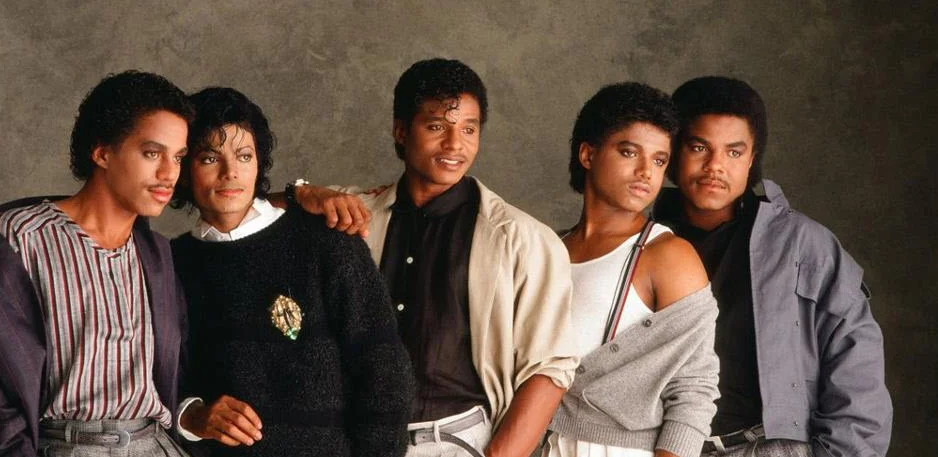
Number 1. The Jackson 5
Before there was New Edition, there was the Jackson 5.
And before there was the modern boy-band formula, there was a group of five brothers from Gary, Indiana who could sing, dance and command a stage with astonishing precision.
“I Want You Back.”
“ABC.”
“The Love You Save.”
“I’ll Be There.”
The records were spectacular, but the visual impact mattered just as much.
The Jackson 5 brought together tight harmonies, infectious pop hooks, synchronized choreography and youthful charisma. At the center was Michael Jackson, whose talent was so enormous that he could eventually become bigger than the group itself.
Yet the group’s influence isn’t simply about Michael.
The Jackson 5 demonstrated that the members of a young male vocal group could function as a complete performance unit. Nobody had to stand around waiting for one person to carry the show. They sang. They danced. They interacted. They entertained.
That combination became one of the essential building blocks of the boy-band formula.
And nearly every generation that followed borrowed something from it.
The Osmonds took notes.
New Edition took notes.
New Kids on the Block took notes.
Boyz II Men came through the New Edition lineage.
Backstreet Boys and *NSYNC inherited the singing-and-dancing model.
Even modern K-pop groups operate within a performance tradition that owes something to what the Jackson 5 established.
That’s what makes the Jackson 5 the logical Number 1.
They didn’t merely become one of the most successful young groups of their era.
They helped establish the blueprint.
The Boy-Band Family Tree Is Bigger Than One Decade
The interesting thing about this list is that it doesn’t really end with Number 1.
It connects.
The Jackson 5 helped establish the musical and performance template. New Edition adapted it for a new generation and brought R&B and hip-hop into the equation. New Kids on the Block expanded the commercial possibilities. Boyz II Men pushed vocal harmony to the center. Backstreet Boys and *NSYNC took the formula global and into the MTV era. One Direction rebuilt it for social media. BTS expanded the concept into a truly global digital fandom.
That’s why calling boy bands a fad has always been a little misleading.
The hairstyles change.
The choreography changes.
The technology changes.
The audience changes.
But the basic attraction remains remarkably durable: five or so young men, distinct personalities, memorable songs, harmony, movement and the feeling that you aren’t simply listening to a group—you’ve joined a community of fans.
And that may be the real secret behind the boy band’s survival.
The music gets you in the door.
The fandom keeps you there.
Who did we miss? And which group would you put at Number 1?
For more music countdowns, documentaries and stories about the artists who shaped the soundtrack of our lives, continue the journey at SoundbiteBio.com.