
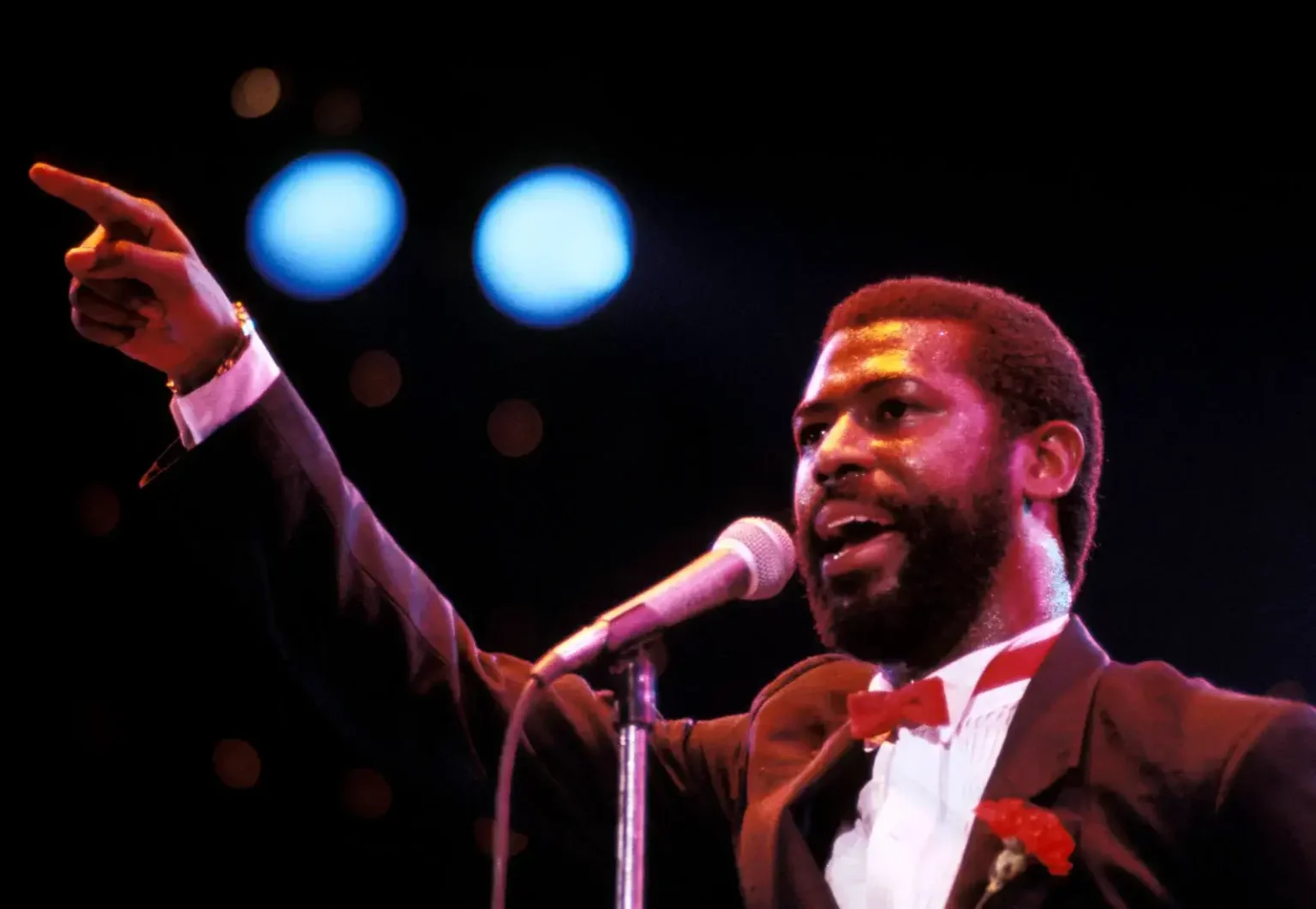

There are voices that entertain.
There are voices that seduce.
And then there are voices that command the room — voices that don’t just sing love songs, but redefine intimacy, masculinity, and emotional power in music.
Teddy Pendergrass had one of those voices.
He didn’t merely perform R&B — he embodied it.
His baritone wasn’t just smooth; it was dangerous, tender, pleading, dominant, and vulnerable all at once. In the late ’70s and early ’80s, Teddy didn’t just top charts — he set the mood for a generation.
And then fate intervened.
But the story didn’t end there.
Early Life: The Making of a Philly Soul Warrior (1950–1970)
Born in 1950 in Philadelphia, Teddy Pendergrass grew up in a city where music was religion — gospel in church, soul in the streets, rhythm everywhere.
His first instrument was drums, not vocals. He played with intensity, drive, and discipline — traits that would later define his singing. There was always a sense that Teddy approached music like a fighter stepping into the ring.
By the early 1970s, he found his calling with Harold Melvin & the Blue Notes, becoming the emotional engine behind what would soon be called Philly soul.
Harold Melvin & the Blue Notes: The Rise of a Star (1972–1975)
Teddy’s voice quickly became the center of gravity for the group.
Tracks like:
- “If You Don’t Know Me by Now”
- “The Love I Lost”
- “Wake Up Everybody”
weren’t just hits — they were statements. His delivery carried authority, heartbreak, and longing in equal measure.
Soon, it became obvious:
This wasn’t just a lead singer in a group.
This was a solo superstar waiting to happen.
Solo Breakout: The Birth of a Sex Symbol (1977–1981)
When Teddy launched his solo career, something shifted in R&B.
He released a run of albums that felt like late-night confessions set to velvet:
- Teddy Pendergrass (1977)
- Life Is a Song Worth Singing (1978)
- Teddy (1979)
- TP (1980)
Songs like:
- “Close the Door”
- “Turn Off the Lights”
- “Come Go with Me”
- “Love T.K.O.”
turned him into a romantic icon — the voice of grown-folk desire, slow dances, candlelight, and whispered promises.
His live shows became legendary, especially the “Ladies Only” concerts, where he played to rooms packed with screaming fans. Teddy wasn’t just singing love songs — he was performing intimacy.
1982: The Accident That Changed Everything
In 1982, at the height of his powers, Teddy Pendergrass was involved in a devastating car accident that left him paralyzed from the chest down.
It was the kind of tragedy that could have ended a career — and might have ended a lesser artist’s spirit.
But Teddy refused to disappear.
His silence during recovery only deepened the myth. Fans waited. The industry wondered. And when he finally returned, it wasn’t as a victim — but as a survivor.
The Comeback: Strength, Spirit, and Survival (1985–1990s)
Teddy’s return wasn’t about reclaiming sex-symbol status — it was about reclaiming dignity, artistry, and voice.
His comeback performances, including his emotional appearance at Live Aid (1985), reminded the world that true soul doesn’t vanish with tragedy.
He scored renewed success with collaborations, including:
- “Joy” (1991) — a late-career hit that proved he could still dominate the charts
Where he once represented romantic fantasy, he now embodied resilience, courage, and perseverance.
Later Years & Passing (2000–2010)
Teddy Pendergrass remained a revered figure in soul and R&B, mentoring younger artists and preserving the legacy of classic Philadelphia soul.
He passed away in 2010, but by then, his place in music history was already secure — not just as a hitmaker, but as a symbol of strength, passion, and emotional honesty.
Legacy: Why Teddy Pendergrass Still Matters
Teddy didn’t just influence singers — he redefined how male vulnerability and desire could sound in popular music.
🎤 Vocal Power
His voice blended authority and tenderness — a blueprint later echoed by:
- R. Kelly
- Maxwell
- Charlie Wilson
- Tank
- John Legend
❤️ Emotional Authenticity
Teddy made love songs feel adult, real, and lived-in — not fantasy, but experience.
🕊 Symbol of Resilience
His post-accident comeback remains one of music’s most powerful stories of perseverance.
Final Reflection
Teddy Pendergrass wasn’t just the king of romantic soul —
he was the sound of desire, heartbreak, recovery, and survival.
Where some singers perform emotion, Teddy lived it —
every note weighted with experience, authority, and truth.
And decades later, when one of his records spins late at night,
that voice still feels like a hand on your shoulder
and a confession whispered in the dark.