
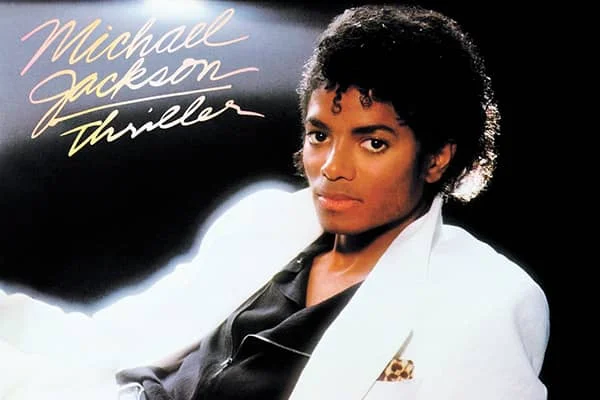

The global phenomenon of Thriller cast a long, daunting shadow.
There’s a particular kind of silence that follows a seismic moment in music—a pause where the world waits to see if lightning can strike twice. In 1982, Michael Jackson didn’t just release an album; he detonated a cultural event. Thriller didn’t merely top charts—it rewrote the language of pop stardom. And when the dust settled, the question wasn’t whether he could follow it up. It was whether anyone—even him—should try.
But here’s the thing about Jackson: he wasn’t built to repeat himself. The years that followed weren’t about chasing the ghost of Thriller. They were about confronting it, dismantling it, and ultimately transcending it. What emerged from the late ’80s into the early ’90s was something deeper, stranger, and far more revealing—a period where Jackson stopped being just the “King of Pop” and became something closer to a restless auteur.
This wasn’t a victory lap. It was a reinvention.
The Authoritarian Vision of Bad (1987)
If Thriller was a communal masterpiece—shaped by the guiding hand of Quincy Jones and a stable of elite collaborators—then Bad was Jackson stepping into the control room and locking the door behind him.
You could feel it from the first note. There was a new tension in the air.
Jackson wrote or co-wrote nearly every track, co-produced the entire record, and—most importantly—imposed his will on every sonic decision. This wasn’t just evolution; it was a declaration of independence. The title track, with its clipped rhythms and confrontational swagger, introduced a harder, more defiant persona. Gone was the wide-eyed romantic of “The Girl Is Mine.” In his place stood a streetwise antihero, daring you to question him.
Then came “Smooth Criminal”—all staccato urgency and noir tension. It didn’t just sound different; it felt cinematic, like a scene unfolding in real time. That instinct for visual storytelling reached its peak in the “Bad” short film, directed by Martin Scorsese—an 18-minute urban opera that blurred the line between music video and serious cinema.
Technologically, Jackson was already peering into the future. “Leave Me Alone” became a surreal collage of media satire, using early digital animation to take aim at the tabloid circus that had begun to surround him. It was playful on the surface, but underneath was something sharper—a man pushing back against the narrative being written about him.
Musically, Bad stretched in multiple directions at once. Tracks like “Dirty Diana” proved he could step into rock territory without losing his identity, while still anchoring the album in funk and pop. It was arena-ready, but also deeply personal.
And that’s where the shift really begins.
Lyrically, you start to hear the cracks. Isolation. Paranoia. Defiance. These weren’t just themes—they were signals. Jackson wasn’t just making hits anymore. He was beginning to process something darker, something more complicated.
The Dangerous Leap: Synesthesia and Social Conscience (1991)
By the time Dangerous arrived, Jackson wasn’t just evolving—he was mutating in real time.
This is where things get fascinating.
Instead of leaning on past collaborators, he brought in a young architect of rhythm named Teddy Riley—the mastermind behind new jack swing. It could have been a risky move, even a desperate one. But Jackson didn’t chase the sound; he absorbed it, reshaped it, and expanded it into something cinematic.
Listen closely, and you can hear the architecture.
“Jam” hits like a steel beam—sharp, metallic, aggressive. “In the Closet” feels fluid, almost aquatic, its synths moving like waves under the surface. “Give In to Me” dissolves into a psychedelic haze, while “Will You Be There” builds like a cathedral, layer by layer.
This was Jackson as a sonic architect, constructing entire worlds inside his songs.
He leaned heavily into cutting-edge tools like the Synclavier, stacking samples, textures, and rhythms until each track felt alive—breathing, shifting, evolving. It wasn’t just music; it was atmosphere.
But what really set Dangerous apart was its emotional and thematic ambition.
Yes, there were still moments of intimacy—“Remember the Time,” “Who Is It”—but the album’s center of gravity had shifted outward. Jackson was now engaging directly with the world around him.
“Black or White” wasn’t subtle—it was a blunt-force plea for unity, driven by raw guitar energy. “Heal the World” reached for something even bigger, a global anthem of compassion and environmental awareness. And “Why You Wanna Trip on Me” cut straight to the bone, calling out media obsession while real crises—homelessness, disease, inequality—went ignored.
This was no longer just pop music. It was commentary.
The visuals matched the ambition. The “Black or White” video, directed by John Landis, introduced groundbreaking morphing effects that felt almost supernatural at the time. Meanwhile, “Remember the Time,” helmed by John Singleton, transformed a music video into a full-scale historical fantasy.
And then there was “Jam,” where Jackson shared the screen with Michael Jordan—a meeting of cultural titans that blurred the boundaries between music, sports, and myth.
By now, the line between artist and icon had all but disappeared.
The Visual Symphony and Theatrical Ambition
To understand this era, you have to understand one thing: Jackson never thought in just one medium.
Music was only the beginning.
Every song had a visual counterpart. Every performance was an event. Every costume was a statement. He collaborated with designers like John Galliano, crafting a look that felt both militaristic and regal—part soldier, part king, part futuristic myth.
Those jackets, those gloves, those silhouettes—they weren’t just fashion. They were armor.
And nowhere was this more evident than his performance at the Super Bowl XXVII Halftime Show. Before Jackson, halftime was an afterthought. After him, it became a global stage.
He stood there, motionless at first, letting the anticipation build until the crowd erupted. Then he moved—and the world followed. Over 130 million viewers watched as he turned a football intermission into a cultural spectacle.
It wasn’t just a performance. It was a statement of dominance.
Behind the scenes, his ambitions were even bigger. The planned Dangerous tour was set to be a technological marvel—massive video screens, elaborate stage mechanics, a budget that rivaled major films. Though ultimately cut short, its scale hinted at where live music was headed.
Jackson wasn’t just participating in the future of entertainment. He was designing it.
The Human Complex: Vulnerability and Scrutiny
But as the spectacle grew, so did the pressure.
There’s a moment in every artist’s life where the myth begins to eclipse the man. For Jackson, that moment stretched into years.
The media fixation became relentless—his appearance, his lifestyle, even his companionship with his pet chimpanzee. It all fed into a narrative that felt increasingly detached from reality.
And yet, instead of retreating, Jackson responded the only way he knew how: through music.
“Leave Me Alone” wasn’t just a catchy track—it was a protest. “Why You Wanna Trip on Me” was a confrontation. These songs carried an edge that felt less performative and more personal.
Then there were the quieter moments.
“Gone Too Soon,” written in memory of Ryan White, carried a fragile tenderness that cut through the noise. “Will You Be There” felt almost spiritual—a plea for connection in a world that seemed increasingly isolating.
This is where the era becomes truly poignant.
Because beneath the innovation, beneath the spectacle, beneath the mythology—there was a man trying to hold onto something human.
His collaborations extended into film, working again with Steven Spielberg on projects like “Captain EO.” These weren’t side ventures—they were extensions of his vision, attempts to build immersive worlds where music, film, and fantasy could coexist.
Jackson wasn’t just creating songs. He was building an ecosystem.
Conclusion: The Unfinished Symphony
Looking back, the years following Thriller might be the most revealing chapter of Jackson’s career.
They’re not as universally celebrated. They’re not as immediately accessible. But they’re deeper, riskier, more personal.
From Bad through the early Dangerous era, Jackson embraced technology, expanded his thematic reach, and confronted his own mythology head-on. He fused pop, rock, funk, and emerging urban sounds into something entirely his own.
This wasn’t about maintaining a throne. It was about redefining it.
And maybe that’s the real story here.
Because in chasing something bigger than Thriller, Jackson didn’t just succeed—he exposed the cost of that ambition. The art became richer, more layered, more resonant. But it also became more fragile, more human.
In the end, this era doesn’t live in the shadow of Thriller. It stands beside it—as its darker, more complex counterpart.
An unfinished symphony, still echoing.
Frequently Asked Questions
Why is the Dangerous album often considered underrated compared to Thriller?
Dangerous trades immediacy for complexity. Where Thriller delivers instant hooks, Dangerous builds atmosphere and depth. Its new jack swing influences and layered production were ahead of their time, making it a slower burn for mainstream audiences—but one that has aged remarkably well.
What was the significance of Teddy Riley’s collaboration?
Teddy Riley brought a contemporary rhythmic edge that revitalized Jackson’s sound. Together, they created a hybrid style—gritty yet melodic—that pushed pop music forward instead of simply following trends.
How did Michael Jackson’s control over his music change after Thriller?
After Thriller, Jackson took full creative control—overseeing production, songwriting, and overall direction. This resulted in a more cohesive and personal sound, reflecting his evolving artistic vision.
What was the intended impact of songs like “Black or White” and “Heal the World”?
These songs were central to Jackson’s mission to use his platform for change. They addressed racial unity, environmental awareness, and humanitarian issues—turning pop music into a vehicle for global messaging.
How did media scrutiny affect his creativity?
It fueled it. The pressure and criticism inspired some of his most direct and emotionally charged work. But it also intensified his perfectionism and isolation, creating a tension that’s deeply embedded in the music of this era.


