
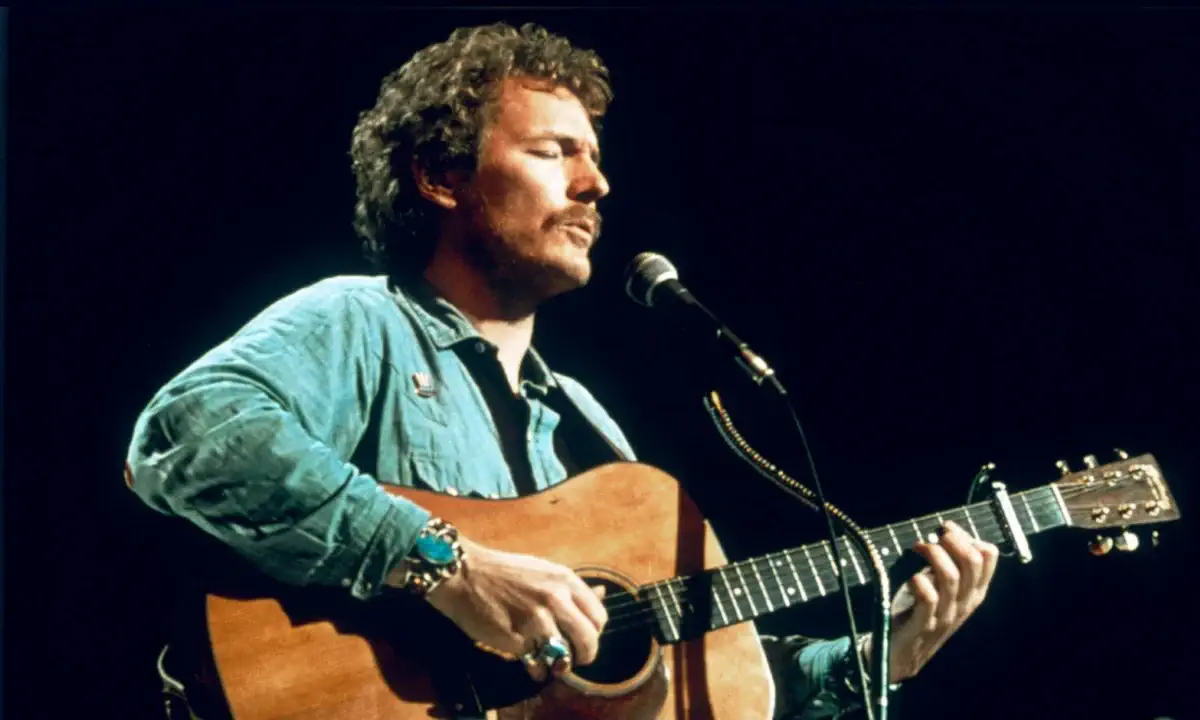

There are songs that entertain. There are songs that haunt. And then there are songs that feel less like music and more like a private confession accidentally left on public display.
Gordon Lightfoot’s “If You Could Read My Mind” belongs to that rare third category — a song so emotionally transparent it almost feels intrusive to listen to, as if you’ve stumbled across a diary entry written at three in the morning, ink smudged by regret and memory.
By 1970, Lightfoot was already respected — a craftsman of folk narratives, a poet of rivers, railways, and quiet Canadian landscapes. But this song marked something different. It wasn’t a story about history or characters. It was about him, his heart, and the slow emotional erosion of a marriage that had reached its silent breaking point.
This was Lightfoot stepping out from behind the storyteller’s mask — and it changed everything.
A Song Born from Private Collapse
“If You Could Read My Mind” emerged during the unraveling of Lightfoot’s marriage to Brita Ingegerd Olaisson, his first wife. Fame had arrived, touring schedules intensified, distance widened, and emotional fractures deepened. Love didn’t explode — it wore down, quietly, painfully, and irreversibly.
That’s what makes the song so devastating.
There’s no melodrama.
No shouting.
No theatrical heartbreak.
Instead, Lightfoot captures something far more devastating: the quiet moment when two people realize the feeling is gone, and no one knows how to bring it back.
It is the sound of love fading — not in flames, but in fading light.
The Songwriting Genius: Emotional Precision Without Excess
Lightfoot’s genius wasn’t in exaggeration — it was in restraint.
Where lesser writers might have leaned into bitterness or self-pity, Lightfoot chose emotional clarity. His narrator doesn’t rage. He reflects. He analyzes. He tries to understand his own confusion as much as his partner’s.
The central premise — “If you could read my mind…” — isn’t a threat or a plea. It’s a philosophical lament. It suggests that the true tragedy of the relationship is misunderstanding, not betrayal.
This is adult heartbreak — reflective, weary, and brutally honest.
The Movie Metaphor: Love as a Film with the Wrong Ending
One of Lightfoot’s most brilliant songwriting moves is framing the relationship as a movie script:
“If you could read my mind, love, what a tale my thoughts could tell…”
He describes romance like a cinematic narrative that started with optimism but drifted into confusion. It’s an inspired metaphor — love as a story whose ending didn’t match the promise of its opening scene.
This isn’t accidental cleverness.
It’s a master songwriter using art to process emotional reality.
Lightfoot once said he felt like he was watching his own life unfold like a film he couldn’t rewrite — trapped in a plot where the emotional arc had already collapsed.
Written Quickly, Felt Forever
Legend has it the song came in a rapid emotional burst — not over months of tinkering, but in a rush of feeling that demanded immediate expression.
That urgency matters.
Songs like this don’t feel crafted.
They feel extracted.
Lightfoot wasn’t chasing a hit. He was trying to survive a moment emotionally. And somehow, in doing so, he created a song that millions of people would later recognize as their own story.
A Voice That Sounds Like Truth
Lightfoot’s vocal performance is crucial to the song’s impact. He doesn’t oversing. He doesn’t dramatize. His voice carries a gentle weariness — the tone of someone who has already fought the emotional battle and is now simply reporting the aftermath.
There’s resignation in his phrasing.
There’s tenderness.
There’s emotional exhaustion.
It’s the sound of a man who has reached acceptance — not happily, but honestly.
And that’s where the song’s power lives.
Personal Pain Turned Universal Language
What separates great songwriting from good songwriting is translation — the ability to take a personal experience and transform it into something universal.
Lightfoot’s heartbreak wasn’t unique.
But his articulation of it was.
Listeners didn’t hear gossip.
They heard themselves.
They heard:
-
The slow death of romance
-
The frustration of emotional distance
-
The longing to be understood
-
The sadness of realizing love can’t always be saved
This wasn’t celebrity drama.
It was human truth.
Commercial Success Without Compromise
When “If You Could Read My Mind” was released on Sit Down Young Stranger (1970), it became Lightfoot’s biggest hit:
-
#5 on the Billboard Hot 100
-
A major international success
-
A defining entry in the singer-songwriter canon
But what’s remarkable is that the song didn’t compromise its emotional subtlety to become popular. It succeeded because it was honest — not because it was catchy or sensational.
That’s rare.
A Masterclass in Adult Songwriting
At a time when pop music often leaned toward fantasy, rebellion, or youthful romance, Lightfoot delivered something different: a mature emotional reckoning.
No villains.
No heroes.
Just two people drifting apart.
It’s the kind of songwriting that doesn’t shout for attention — it earns it.
In many ways, the song helped define the singer-songwriter movement’s emotional credibility, standing alongside the work of Joni Mitchell, James Taylor, Carole King, and Leonard Cohen — artists who proved that vulnerability could be a form of strength.
Reinvention Through Covers: A Song That Refuses to Age
The song’s longevity speaks volumes.
It has been reinterpreted across decades — most famously by:
-
Barbra Streisand, who amplified its drama
-
Stars on 54, who transformed it into a late-’90s dance hit
Each reinvention proves the core truth remains intact:
great emotional songwriting transcends genre.
Strip away the production, the decade, or the arrangement — the heart still beats.
Lightfoot’s Legacy: The Power of Quiet Genius
Gordon Lightfoot never chased flash.
He chased precision.
“If You Could Read My Mind” represents his highest artistic instinct:
-
To write honestly
-
To avoid melodrama
-
To trust emotional intelligence over spectacle
Where some artists burn bright and burn out, Lightfoot built a legacy of enduring emotional architecture — songs that feel lived-in, thoughtful, and permanently relevant.
This track stands among his finest achievements — not because it’s loud, but because it’s true.
Why the Song Still Hurts — and Still Heals
Decades later, the song remains devastating in the best way.
It speaks to anyone who has:
-
Loved and lost
-
Tried to explain feelings they couldn’t fully understand
-
Stayed too long
-
Let go too late
It doesn’t judge.
It doesn’t accuse.
It simply understands.
And in that understanding lies its genius.
Gordon Lightfoot didn’t just write a breakup song.
He wrote a psychological portrait of love’s quiet collapse — and somehow made it beautiful.
That’s not just songwriting.
That’s art.


