
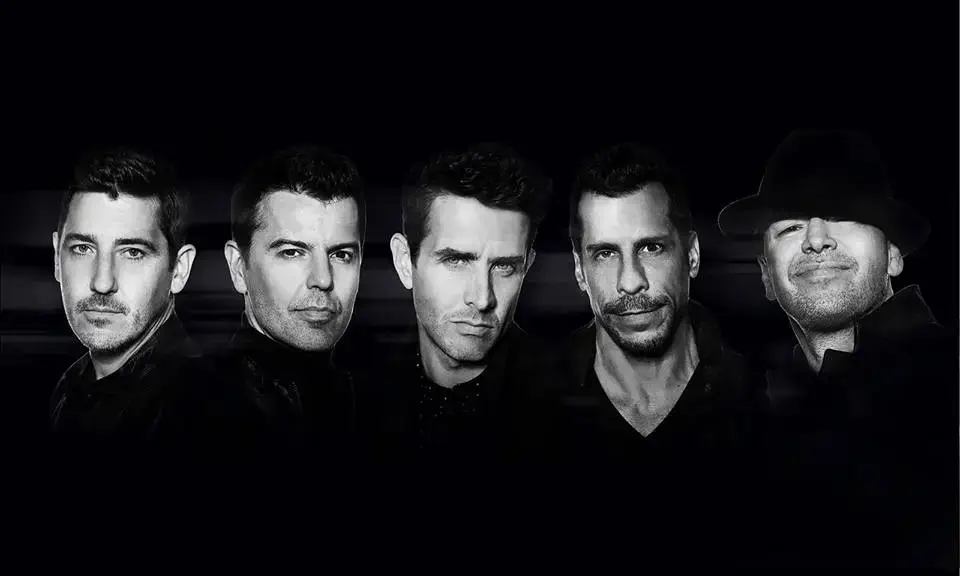

Before New Kids on the Block, There Was New Edition
For a few years in the late 1980s, it seemed like New Kids on the Block had dropped out of the sky.
Suddenly, there they were.
Donnie. Jordan. Jonathan. Danny. Joey.
Five guys from Boston with synchronized moves, catchy songs, colorful clothes and a fan base that could turn a shopping mall into a full-blown security emergency.
They were everywhere.
Radio. MTV. Teen magazines. Lunch boxes. T-shirts. Bedroom walls. Stadiums.
And for millions of fans, New Kids on the Block looked like the beginning of something new.
It wasn’t.
The real story goes back to another group of Boston kids who had already figured out much of the formula.
New Edition.
Before NKOTB became one of the biggest pop acts in America, New Edition had already demonstrated that a group of young men could combine singing, dancing, personality, choreography and R&B swagger into something much bigger than a traditional vocal group.
And the man paying very close attention was producer Maurice Starr.
That’s where the story gets interesting.
Because Starr didn’t simply discover New Kids on the Block.
He essentially took what he had learned from New Edition and built another group around it.
The two groups weren’t identical. Their music, audiences and cultural positions were different.
But the DNA?
It’s unmistakable.
New Edition Was the Test Run
New Edition’s story began in Boston’s Roxbury neighborhood in the late 1970s, when childhood friends Ricky Bell, Michael Bivins and Bobby Brown started singing together. Ralph Tresvant eventually joined, and Ronnie DeVoe completed the lineup.
Choreographer Brooke Payne also played a major role in shaping the young group.
Then came Maurice Starr.
Starr saw something in these kids.
Not simply good voices.
Potential.
The group could sing. They could dance. They had personalities. They looked like kids their audience could relate to. And they could perform.
That last part mattered.
New Edition wasn’t built around the idea of standing behind microphones and politely singing three-part harmony.
They moved.
They performed.
They had characters.
And they had a frontman in Ralph Tresvant who could step forward and deliver a lead vocal while the rest of the group created the musical and visual framework around him.
That formula became obvious when “Candy Girl” arrived in 1983.
The song was R&B, but it also had an electronic, youthful energy that connected with the pop world. New Edition had found a way to make teenage R&B feel immediate and commercial without stripping away its personality.
And suddenly Maurice Starr knew something.
Five young guys could sell a lot of records.
But there was another lesson.
New Edition’s audience was predominantly Black.
Starr believed the formula could reach an even larger mainstream audience if he applied it to a white group.
That idea would become New Kids on the Block.
Enter New Kids on the Block
After Starr and New Edition parted ways, he didn’t walk away from the concept.
He went back to work.
In 1984, Starr and business partner Mary Alford began searching Boston neighborhoods for young white performers who could sing, rap or dance. Donnie Wahlberg became the first member recruited, followed by Danny Wood, Jordan Knight, Jonathan Knight and eventually Joey McIntyre.
And this is where the New Edition connection becomes impossible to ignore.
The same producer.
The same city.
The same basic five-member structure.
The same emphasis on youth.
The same combination of singing and choreography.
The same R&B foundation.
The same idea that a boy band wasn’t merely a musical group.
It was a performance package.
Starr had already learned the mechanics.
Now he was changing the packaging.
New Edition had been his proof of concept.
New Kids on the Block would become the blockbuster version.
But NKOTB Had Something New
Here’s where I think it’s important not to diminish New Kids on the Block.
Calling them a copy of New Edition is too simplistic.
New Kids had to figure out how to make the formula work for their own personalities.
And they did.
Donnie Wahlberg wasn’t trying to be Bobby Brown.
Jordan Knight wasn’t Ralph Tresvant.
Joey McIntyre wasn’t simply another young R&B lead singer.
The group developed its own identity.
Donnie brought the hip-hop influence and attitude. Jordan became the smooth, high-pitched vocal star. Joey provided the youngest-member appeal. Danny and Jonathan helped complete the group dynamic.
They were five different personalities packaged as one team.
That distinction would become enormously important.
Because the future of the boy band wasn’t going to depend solely on having five good singers.
It was going to depend on giving every member a role.
That became one of the great secrets of the NKOTB phenomenon.
The Music Had to Sound Right
There’s another connection between the groups that sometimes gets overlooked.
New Kids on the Block didn’t abandon Black American musical influences to become pop stars.
They leaned into them.
Their early material was heavily influenced by R&B, soul and hip-hop.
Their 1986 debut even included a cover of the Delfonics’ “Didn’t I (Blow Your Mind This Time),” a choice that tells you plenty about the musical world Starr was trying to create.
Then came “Please Don’t Go Girl.”
That song changed everything.
It wasn’t a hard-driving dance record.
It was a ballad.
And it gave Jordan Knight and Joey McIntyre room to show the group’s softer side.
More importantly, it helped move New Kids from a struggling young act into a mainstream pop phenomenon.
Suddenly the formula had clicked.
New Edition had proven that the combination of youthful R&B, harmonies, choreography and personalities could work.
New Kids figured out how to sell that combination to an enormous mainstream pop audience.
Then Came Hangin’ Tough
This is where the experiment became an empire.
The 1988 album Hangin’ Tough transformed New Kids on the Block from promising Boston teenagers into a cultural phenomenon.
The title track gave them swagger.
“Cover Girl” gave them another pop-friendly hit.
“Didn’t I (Blow Your Mind This Time)” connected them back to classic soul.
And “You Got It (The Right Stuff)” gave them perhaps the purest expression of the NKOTB formula.
It was catchy.
It was danceable.
It had an unmistakable R&B flavor.
And the choreography made the song impossible to separate from the group itself.
The Kids weren’t simply singing the song.
They were selling the experience.
That’s an important distinction.
By the end of the decade, New Kids on the Block had become much bigger than their records.
They were a brand.
Their faces appeared on merchandise. Their fan club exploded. Their concerts became massive events. Their audience didn’t simply listen to the group.
They participated in the phenomenon.
That was the part of the formula that would become enormously influential.
New Edition Had Already Shown the Way
New Edition didn’t create every ingredient in the boy-band recipe.
The Jackson 5 had obviously established the power of a young male vocal group decades earlier. The Temptations, the Four Tops, the Osmonds and countless other groups had already demonstrated the importance of choreography, personality and visual presentation.
But New Edition brought those ingredients into a very specific 1980s environment.
They were young.
They were contemporary.
They incorporated hip-hop and electro influences.
They had choreography.
They had individual personalities.
And they were close enough to their audience’s age to make the fantasy feel attainable.
That was the important breakthrough.
New Edition showed Maurice Starr that the formula could work right now.
New Kids on the Block showed just how big it could become.
The Los Angeles Times later described NKOTB as essentially starting from a “carbon copy” concept, while the Boston Globe reported that Starr specifically wanted a white version of New Edition.
The historical relationship is therefore much more direct than simple musical influence.
Starr had firsthand experience with the blueprint because he had helped build the original.
From New Kids to the Boy-Band Explosion
And then something remarkable happened.
New Kids on the Block didn’t just become successful.
They helped prove there was a massive market for this kind of group.
The 1990s took that template and multiplied it.
Backstreet Boys.
*NSYNC.
98 Degrees.
Boyz II Men.
O-Town.
And later, countless other groups around the world.
The differences were obvious.
Some emphasized R&B.
Some leaned toward pop.
Some were more dance-oriented.
Some were built around harmonies.
But the basic architecture remained remarkably familiar:
Five—or roughly five—young men.
Distinct personalities.
Lead singers and supporting voices.
Choreography.
Individual identities within a group identity.
Songs designed for radio.
Visuals designed for television.
And an audience encouraged to choose a favorite member.
That last part may be one of the most important.
Because the boy-band business wasn’t simply selling songs.
It was selling relationships between fans and personalities.
You didn’t just like New Kids on the Block.
You had a favorite Kid.
And that idea became a billion-dollar piece of the pop-music machine.
Boston Was the Common Thread
There’s something almost too perfect about the geography of the story.
New Edition emerged from Boston.
New Kids on the Block emerged from Boston.
Maurice Starr connected them.
And both groups helped change the way America thought about young male vocal groups.
New Edition’s members would go on to create an extraordinary musical legacy of their own.
Bobby Brown became a major solo star. Ralph Tresvant established a solo career. Michael Bivins became an important architect behind Bell Biv DeVoe and Boyz II Men. And New Edition themselves evolved from teen idols into a mature R&B institution.
Their influence eventually stretched far beyond New Kids on the Block.
But NKOTB became the group that demonstrated what happened when the blueprint was connected to mainstream pop marketing on an enormous scale.
The Guardian has described Starr’s repetition of the New Edition formula with New Kids as a key part of the birth of the modern boy-band model.
And that’s why the relationship between the two groups matters.
New Edition Was the Prototype. NKOTB Took It to the World.
It’s tempting to look back at New Kids on the Block and see them simply as an ’80s nostalgia act.
That misses the bigger story.
Before the screaming fans, the sold-out arenas, the merchandise and the magazine covers, there was a producer in Boston who had already discovered something powerful.
He had watched five young Black kids from Roxbury become stars.
Then he took the lessons from that experience and built another five-member group.
This time, they were white.
This time, the target audience was broader.
And this time, the cultural explosion was enormous.
New Edition was the prototype.
New Kids on the Block were the proof that the prototype could become a global pop machine.
And maybe that’s the most fascinating part of the story.
The group that looked like it invented the modern boy band was actually standing on the shoulders of another Boston group that had already figured out the right stuff.
New Kids on the Block didn’t come out of nowhere.
They came out of New Edition’s blueprint—and took it to another level.


