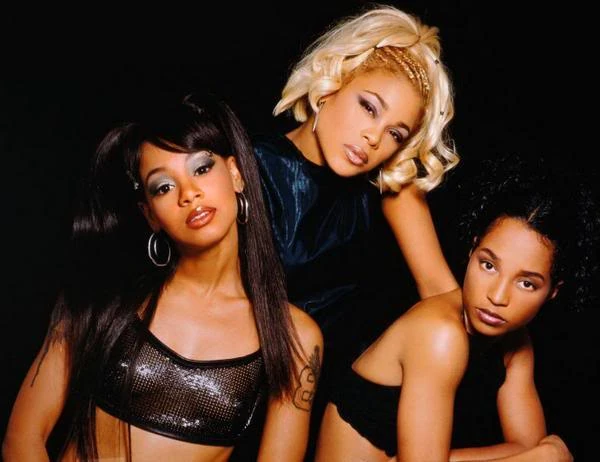

There was a moment in the early ’90s when R&B shifted from silk-sheet slow jams and buttoned-up harmonies into something louder, bolder, and far more rebellious. That moment wore oversized jerseys, combat boots, condoms pinned to clothing, and delivered messages wrapped inside hooks you couldn’t escape. That moment was TLC.
Tionne “T-Boz” Watkins, Lisa “Left Eye” Lopes, and Rozonda “Chilli” Thomas didn’t just sell records — they rewrote the DNA of girl groups. They blended hip-hop attitude with R&B vulnerability, social activism with pop accessibility. TLC wasn’t just music; it was movement, therapy session, and fashion revolution all rolled into one.
Here are the 10 songs that best define TLC’s genius, ranked not just by chart success, but by cultural weight, storytelling power, and timeless replay value.
1. Waterfalls (1995)
If TLC has a defining anthem — the song that turned them into global icons — it’s “Waterfalls.” Built around a hypnotic bassline and smooth gospel-tinged harmonies, the song tackled topics most mainstream radio avoided: HIV/AIDS, drug trafficking, and systemic despair.
Left Eye’s closing rap verse remains one of the most chilling spoken moments in pop history. It didn’t feel like performance — it felt like warning.
“Waterfalls” became TLC’s longest-running No. 1 hit and helped cement CrazySexyCool as one of the most important R&B albums ever recorded. But more than charts, the song proved R&B could be socially conscious without losing commercial appeal.
2. No Scrubs (1999)
By 1999, TLC had evolved from trailblazers into full-blown cultural referees, calling out bad dating behavior with “No Scrubs.” The track arrived like a perfectly timed clapback, defining relationship standards for an entire generation.
The sleek, futuristic production paired perfectly with its unapologetic message. The phrase “scrub” instantly became part of everyday vocabulary.
Beyond its massive commercial success, “No Scrubs” quietly redefined female empowerment in pop music. It wasn’t angry. It wasn’t bitter. It was confident, witty, and refreshingly honest.
3. Creep (1994)
“Creep” marked TLC’s musical and emotional maturation. Slower, sultrier, and layered with vulnerability, the song flipped traditional relationship narratives by addressing female infidelity from a complicated, almost sympathetic perspective.
T-Boz’s husky, conversational delivery gives the song an intimate, diary-like quality. It feels less like a confession and more like survival storytelling.
Winning a Grammy Award, “Creep” announced TLC’s shift into deeper emotional territory — proving they could handle adult themes without losing relatability.
4. Unpretty (1999)
“Unpretty” may be TLC’s most emotionally devastating song. Written during the height of their fame, it peeled back the glamorous surface and exposed the crushing pressures of beauty standards and self-image.
The acoustic-driven arrangement was a bold sonic departure for TLC, trading hip-hop grooves for raw vulnerability. Its lyrics still resonate in today’s social media-driven culture, where image insecurity remains a global issue.
Few pop songs have captured emotional fragility with such honesty.
5. Red Light Special (1995)
Where TLC often leaned into empowerment and social awareness, “Red Light Special” explored intimacy with quiet confidence. The Babyface-produced track glides smoothly through candlelit slow-jam territory.
The song’s restrained sensuality stands out. TLC didn’t rely on overt sexuality; they leaned into emotional connection and atmosphere. It became a defining bedroom anthem of the mid-90s and showcased their vocal chemistry at its finest.
6. Ain’t 2 Proud 2 Beg (1992)
TLC burst onto the scene with fearless swagger on “Ain’t 2 Proud 2 Beg.” The track introduced audiences to their signature blend of playful boldness and safe-sex advocacy — a shocking combination for mainstream radio at the time.
Left Eye’s playful rap interjections gave the song hip-hop authenticity, while the trio’s fashion and choreography instantly made them trendsetters.
The single didn’t just launch TLC — it signaled that R&B girl groups could be outspoken, funny, and socially responsible all at once.
7. What About Your Friends (1992)
Before TLC became chart royalty, they proved their storytelling power with “What About Your Friends.” The song tackled loyalty and betrayal within friendships — a topic rarely explored in pop music.
Its New Jack Swing rhythm captures early ’90s club energy, but the song’s real strength lies in its emotional relatability. Nearly everyone has lived through the heartbreak of discovering who their real friends are.
It remains one of TLC’s most underappreciated lyrical achievements.
8. Baby-Baby-Baby (1992)
“Baby-Baby-Baby” revealed TLC’s softer romantic side while maintaining their playful confidence. The song’s smooth groove and catchy chorus helped expand their audience beyond hip-hop-leaning listeners.
The track showed TLC could balance radio-friendly romance with their edgy identity. It was a critical step in transforming them from rising newcomers into mainstream stars.
9. Diggin’ On You (1995)
“Diggin’ On You” often feels like TLC’s most overlooked masterpiece. The laid-back groove perfectly captures mid-90s R&B’s golden warmth.
The song celebrates the excitement of new love without overcomplication. Its subtle instrumentation allows the group’s harmonies to take center stage, highlighting their vocal maturity.
For longtime fans, this track feels like a hidden gem — the musical equivalent of late-night radio magic.
10. Girl Talk (2002)
Released after the tragic loss of Left Eye, “Girl Talk” became TLC’s emotional and creative comeback statement. The Neptunes-produced beat gave the group a futuristic edge, while the lyrics maintained their signature empowerment themes.
Though the group dynamic had forever changed, the song proved TLC’s resilience. It serves as both tribute and evolution, demonstrating their ability to adapt while honoring their legacy.
Why TLC’s Music Still Matters
TLC’s catalog isn’t just a collection of hits. It’s a social time capsule. They addressed AIDS awareness, toxic relationships, beauty insecurity, self-worth, and independence long before those conversations became mainstream pop talking points.
Their sound fused hip-hop beats, gospel harmonies, funk basslines, and pop melodies into a style that influenced artists ranging from Destiny’s Child to Rihanna to contemporary R&B newcomers.
Even their visual identity — colorful, rebellious, and message-driven — reshaped how female artists presented themselves in the music industry.
The Legacy of TLC
TLC remains the best-selling American girl group of all time, but numbers only tell part of the story. Their real legacy lives in how they gave listeners permission to be vulnerable, outspoken, and confident simultaneously.
They created songs you could dance to, cry to, argue to, and heal through. Their music spoke directly to young women navigating love, identity, and independence — but it resonated just as strongly with anyone searching for authenticity.
Decades later, TLC’s songs don’t feel nostalgic. They feel permanent.
Because great music doesn’t just capture a moment.
It captures truth.