

The 10 Most Streamed 80s Albums on Spotify — And Why They Still Matter
I’ve watched 80,000 people sing a chorus so loud it felt like the sky might crack.
I’ve stood backstage while amplifiers hummed like nervous animals waiting to be unleashed. I’ve felt a bass drum in my ribs so deeply it rearranged the rhythm of my pulse.
The 1980s weren’t subtle. They weren’t shy. They didn’t whisper.
They announced themselves.
And decades later, long after the cassette tapes tangled and the CDs scratched, the music lives again—inside streaming platforms, especially Spotify, where the numbers tell a story that critics once only guessed at: the 80s never left.
The albums below aren’t just nostalgic favorites. They are among the most streamed 80s albums on Spotify—records that continue to rack up billions of plays, seducing teenagers, resurrecting Gen X memories, and refusing to behave like relics.
Let’s step back into the neon glow.
1. Thriller – Michael Jackson (1982)
If pop music has a North Star, it’s Thriller.
The first time I heard “Billie Jean” in a packed club, the dance floor reacted like it had been plugged into a live wire. That bass line didn’t walk—it stalked. When Michael’s voice slid in, sharp as glass, you knew something irreversible had happened.
On Spotify, Thriller is a juggernaut. Multiple tracks have crossed the billion-stream threshold. “Beat It” still slices. “Wanna Be Startin’ Somethin’” still bursts open speakers. And the title track—complete with Vincent Price’s macabre monologue—has become a permanent Halloween resident.
But here’s what streaming reveals: people aren’t just replaying the hits. They’re listening to the album.
That matters.
Quincy Jones produced it like a jeweler cutting diamonds—every transition clean, every rhythm precise. It was pop perfection with muscle. Rock guitars from Eddie Van Halen. R&B grooves. Funk undercurrents.
Thriller didn’t just define the 80s. It engineered the blueprint for the modern blockbuster album.
And Spotify proves the blueprint still works.
2. Back in Black – AC/DC (1980)
Grief can either silence you or make you louder.
When Bon Scott died in 1980, many thought AC/DC would fade. Instead, they detonated.
Back in Black is one of the best-selling albums in history, and on Spotify it remains one of the most streamed 80s rock albums ever. The opening bell toll of “Hells Bells” still feels ceremonial. “You Shook Me All Night Long” still fills wedding dance floors and dive bars alike.
Brian Johnson stepped into impossible shoes and somehow made them his own.
The production is spare—clean guitars, relentless rhythm, no unnecessary decoration. It’s muscle stripped to bone. That minimalism is precisely why it thrives in the streaming age. It cuts through earbuds like it once cut through stadium air.
You don’t listen to Back in Black. You survive it.
3. Purple Rain – Prince (1984)
There are albums. And then there are mythologies.
Purple Rain belongs to the latter.
I saw Prince perform during that era, and it felt less like a concert and more like witnessing a private electricity storm. He moved with feline grace. He shredded like Hendrix’s heir apparent. He crooned like a soul preacher.
On Spotify, “When Doves Cry” and the title track continue to surge past generations. The brilliance of “Let’s Go Crazy” still explodes through speakers like an urgent sermon.
What makes this album endure is its range. Rock. Funk. Gospel. Synth-pop. All braided together in a fearless swirl of sexuality and spirituality.
Streaming has made Prince immortal in a new way. His music doesn’t sit in dusty crates—it surfaces daily in algorithm-driven playlists. The kids discovering him today don’t hear retro. They hear revelation.
4. Like a Virgin – Madonna (1984)
Before social media influencers gamed attention, Madonna owned it instinctively.
Like a Virgin didn’t just sell records. It sold image, attitude, defiance. “Material Girl” was satire wrapped in bubblegum gloss. The title track walked a tightrope between innocence and provocation.
On Spotify, her 80s catalog remains a streaming powerhouse. Younger listeners who weren’t alive for the MTV explosion now encounter Madonna in curated 80s playlists—and they stay.
What strikes me revisiting this album is how sharp the songwriting remains. Beneath the lace gloves and layered necklaces were hooks engineered to last decades.
And they have.
5. The Joshua Tree – U2 (1987)
I remember the opening notes of “Where the Streets Have No Name” filling a stadium like sunrise spilling over desert rock.
The Joshua Tree was ambition carved into vinyl. It blended American roots music with Irish longing. It turned spiritual hunger into radio gold.
On Spotify, “With or Without You” continues to stream at staggering numbers. It’s a breakup anthem, a wedding slow dance, a late-night drive companion.
The Edge’s chiming guitar still rings like cathedral bells. Bono’s voice still aches with yearning.
This is why it streams: it makes private emotions feel epic.
6. Appetite for Destruction – Guns N’ Roses (1987)
Before rock got polished into parody, it got dangerous again.
Appetite for Destruction arrived like a bar fight crashing into a fashion show. It was messy. Loud. Unapologetic.
“Sweet Child O’ Mine” has surpassed billions of streams. But dig deeper—“Paradise City,” “Welcome to the Jungle.” These aren’t polite songs. They lunge.
I saw Guns N’ Roses in their early days, and there was an unpredictability in the air. That volatility is preserved in the grooves.
Streaming has amplified the album’s afterlife. It’s a rite of passage now—a record every new rock fan eventually finds.
7. Slippery When Wet – Bon Jovi (1986)
If you want to understand 80s arena rock at its most triumphant, drop the needle—or press play—on Slippery When Wet.
I remember the first time I heard “Livin’ on a Prayer” live. When that talk box intro kicked in, the crowd didn’t sing along—they testified. Richie Sambora’s guitar soared. Jon Bon Jovi’s voice cracked just enough to feel human.
On Spotify, this album is unstoppable. “You Give Love a Bad Name.” “Wanted Dead or Alive.” These songs are generational glue. Parents blast them on road trips. Kids rediscover them through movie soundtracks and viral videos.
The genius of Slippery When Wet lies in its accessibility. The hooks are enormous. The choruses are communal. It’s rock built for participation.
And participation is what streaming thrives on.
8. Born in the U.S.A. – Bruce Springsteen (1984)
Few albums have been so widely misunderstood and so widely streamed.
“Born in the U.S.A.” became a patriotic chant, but the verses told a different story—of disillusionment and wounded veterans.
Springsteen’s brilliance is that he wraps hard truths in arena-ready choruses. “Dancing in the Dark” still pulses with restless energy. “Glory Days” still sparks nostalgia for moments slipping away.
On Spotify, these tracks remain staples of classic rock playlists. The E Street Band’s muscular precision still lands with authority.
Streaming hasn’t diluted the message. It’s amplified it.
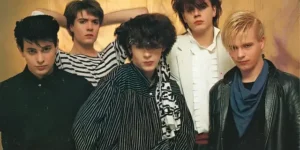
9. Rio – Duran Duran (1982)
Gloss can age poorly.
But not here.
Rio sounds as sleek today as it did when MTV first beamed those exotic visuals into suburban living rooms. John Taylor’s bass lines slink with sophistication. Simon Le Bon’s vocals glide.
“Hungry Like the Wolf” and “Rio” continue to rack up streams, proving that style and substance aren’t mutually exclusive.
This album captured the cosmopolitan fantasy of the 80s—the yachts, the silk suits, the escapism.
And sometimes, escapism is timeless.
10. Faith – George Michael (1987)
Cool can be quiet.
Faith opens with a guitar riff so simple it feels effortless. But beneath the swagger lies vulnerability.
“One More Try” is devastating in its restraint. “Father Figure” simmers. George Michael understood space—when to pull back, when to lean in.
Streaming has been kind to him. Younger listeners who never experienced Wham! discover Faith and realize sophistication doesn’t have to shout.
It’s intimacy wrapped in pop precision.
Why These 80s Albums Still Dominate Spotify
After hundreds of concerts and countless album reviews, I’ve learned one thing: songs survive when they feel personal and universal at once.
The 80s mastered that tension.
These albums endure because:
- The hooks are colossal. You can’t ignore them.
- The production was meticulous. Analog warmth meets digital ambition.
- They tell stories. Of love. Of rebellion. Of faith. Of survival.
Spotify didn’t resurrect these records. It revealed their durability.
In a world of infinite choice, listeners keep coming back to the same ten.
That isn’t nostalgia.
That’s permanence.
The 1980s were loud. They were ambitious. They were unapologetically grand.
And in the quiet glow of streaming screens decades later, they’re still louder than ever.
![The Studio Wizards: How [Producer/Engineer] Crafted the Signature Sound of the 1970s.](https://i3.wp.com/cdn.pixabay.com/photo/2018/06/13/08/01/music-3472184_960_720.jpg?w=300&resize=300,150&ssl=1 "The Studio Wizards: How [Producer/Engineer] Crafted the Signature Sound of the 1970s.")

![Before They Were Stadium Rocks Stars: The Early Gigs and Struggles of [Band].](https://i2.wp.com/cdn.pixabay.com/photo/2017/07/05/04/00/battery-2473407_960_720.jpg?w=300&resize=300,150&ssl=1 "Before They Were Stadium Rocks Stars: The Early Gigs and Struggles of [Band].")