
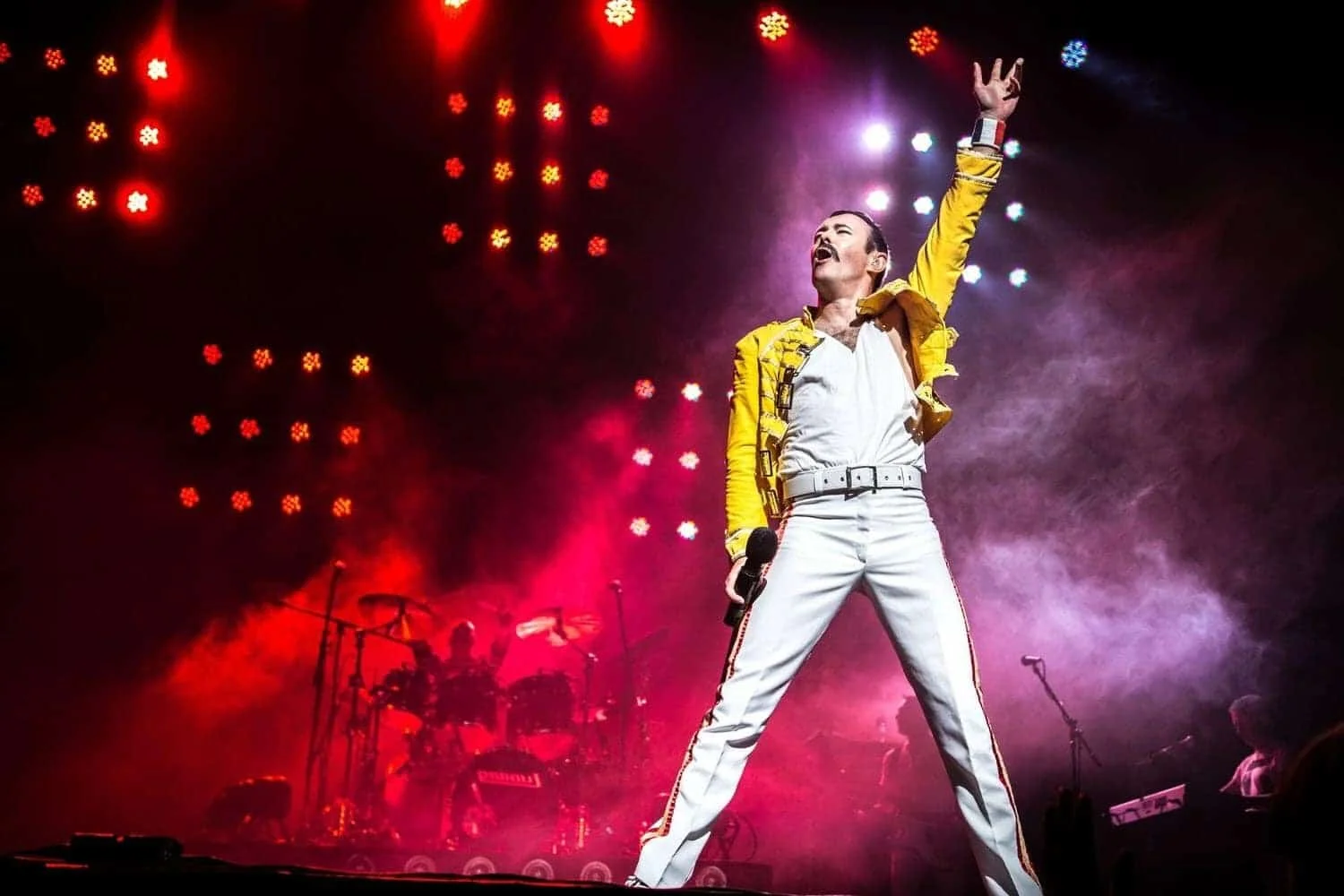

Rock music has never been just about the songs.
It’s about the moment the lights go down. It’s the roar from the crowd before the first note is played. It’s the singer walking onto a stage and somehow making 20,000 people feel like he’s singing directly to them.
It’s the swagger, the vulnerability, the danger, the voice—and sometimes just the sheer audacity of standing in front of a rock band and saying, in effect, watch this.
The greatest rock frontmen understood that being a lead singer was only part of the job.
They were storytellers. Ringmasters. Rebels. Sex symbols. Poets. Provocateurs. Some were born entertainers. Others seemed almost uncomfortable with the attention but became icons anyway.
That’s what makes ranking the Greatest rock frontmen of all time so difficult.
A great voice alone isn’t enough. Neither is charisma. The greatest frontmen combined stage presence, vocal ability, influence, longevity, personality and cultural impact into something larger than the music itself.
So, after weighing all of those qualities, here’s our countdown of the 10 Greatest Rock Frontmen of All Time.
10. Jon Bon Jovi
The Everyman Rock Star
There’s something almost deceptively simple about Jon Bon Jovi.
He looks like a rock star. He sounds like a rock star. He has the hair, the leather, the songs and the arena-sized grin.
But what separated him from hundreds of other singers who came through the 1980s was his ability to make superstardom feel approachable.
Jon Bon Jovi was the everyman rock star.
When Bon Jovi released Slippery When Wet in 1986, the band wasn’t simply making another hard-rock record. They were creating anthems designed to explode in arenas.
Then came “Livin’ on a Prayer.”
That song wasn’t merely a hit. It became a communal experience. Thousands of fans could sing the words together, raise their fists and become part of the performance.
“Wanted Dead or Alive” showed another side of Bon Jovi—the lonely road warrior, staring down the mythology of rock stardom itself.
And that may be his greatest strength as a frontman.
He understood his audience.
Bon Jovi could walk into an enormous stadium and still make the person sitting in the cheap seats feel included.
That’s a rare gift.
9. Axl Rose
Dangerous, Unpredictable and Electrifying
Then there’s Axl Rose.
If Jon Bon Jovi represented the approachable side of arena rock, Axl represented its dangerous side.
When Guns N’ Roses arrived with Appetite for Destruction, rock suddenly sounded meaner, dirtier and far less predictable.
And standing at the center was Axl.
His voice could go from a low, sinister growl to an astonishing high scream in seconds. But the voice was only part of the experience.
Axl moved across a stage like somebody had plugged him into an electrical outlet.
“Welcome to the Jungle” sounded like an invitation and a threat at the same time.
“Sweet Child o’ Mine” revealed the band’s more melodic side, but Axl’s vocal performance kept the song from becoming ordinary power-ballad territory.
He could be difficult. He could be unpredictable. He could be controversial.
But that volatility was part of the appeal.
You never quite knew what Axl Rose was going to do next.
And in rock ‘n’ roll, that’s not always a flaw.
Sometimes it’s the whole point.
8. Jim Morrison
The Poet, Rebel and Rock Shaman
Before rock frontmen became stadium entertainers, Jim Morrison helped turn the singer into something closer to mythology.
Morrison wasn’t simply the lead singer of The Doors.
He became The Lizard King—the poet, the rebel, the mysterious figure standing somewhere between rock star and shaman.
The Doors didn’t even need a traditional guitar-hero frontman because Morrison’s physical presence dominated the stage.
His baritone voice could be seductive one moment and menacing the next.
“Light My Fire” made The Doors international stars, while “Riders on the Storm” revealed a darker, more atmospheric side of Morrison’s artistry.
But Morrison’s greatest contribution may have been the idea that a rock singer could create an entire persona around himself.
He didn’t simply perform songs.
He created a world.
There was always a sense that something dangerous might happen when Morrison walked onto a stage.
And that sense of danger became part of his legend.
7. Bono
Rock Star Charisma Meets Global Influence
Few frontmen have taken the job as seriously—or as globally—as Bono.
When U2 began filling enormous stadiums, Bono discovered something that many performers never quite understand:
A huge audience doesn’t have to make a performance feel impersonal.
He could make an arena feel intimate.
Songs like “With or Without You” demonstrated his emotional side, while “Where the Streets Have No Name” became the kind of massive, uplifting anthem that could turn a stadium into a choir.
But Bono’s influence extends beyond the microphone.
He became a public figure, activist and global celebrity, using the platform created by U2 to address issues far beyond rock music.
You don’t have to agree with every position he’s taken to recognize the magnitude of his influence.
Very few rock frontmen have ever managed to turn the stage into such a large cultural platform.
Bono understood that a microphone could be more than a musical instrument.
It could be a megaphone.
6. Steven Tyler
Part Rock Star, Part Ringmaster
Steven Tyler looks like he was genetically engineered in a laboratory to become a rock frontman.
The scarves.
The strut.
The microphone stand.
The sunglasses.
The outrageous clothes.
And, of course, that voice.
Tyler was part rock star, part ringmaster and part cartoon character—and somehow all three personalities worked.
Aerosmith’s “Dream On” introduced audiences to the extraordinary range hiding inside that raspy voice.
Then “Walk This Way” helped establish Aerosmith as one of America’s most durable rock bands.
Tyler’s greatest weapon wasn’t simply his vocal range. It was his ability to make every performance feel exaggerated.
He didn’t just walk across the stage.
He owned it.
He didn’t simply sing a high note.
He attacked it.
And when Tyler and Joe Perry locked into their familiar partnership, Aerosmith became one of the great American rock ‘n’ roll institutions.
Some frontmen make you want to be them.
Steven Tyler makes you want to see what he’s going to do next.
5. Paul Rodgers
The Singer’s Singer
Paul Rodgers is the kind of singer other singers study.
He doesn’t need to scream every second.
He doesn’t need elaborate costumes.
He doesn’t need to run across the stage.
He simply opens his mouth—and the room changes.
Rodgers established his reputation with Free before becoming the voice of Bad Company, delivering songs with an extraordinary combination of power and restraint.
“All Right Now” became one of rock’s great anthems, while Bad Company’s “Feel Like Makin’ Love” showcased the smoother side of his voice.
There was never much wasted motion.
Rodgers had something that is remarkably difficult to manufacture: effortless cool.
His voice sounded lived-in.
It had grit without becoming forced and power without becoming theatrical.
That’s why musicians have long held Rodgers in such high regard.
He wasn’t trying to sound like a rock singer.
He simply sounded like himself.
And sometimes that’s the most impressive trick of all.
4. Kurt Cobain
The Reluctant Voice of a Generation
Kurt Cobain probably wouldn’t have wanted to be called one of the greatest rock frontmen of all time.
That’s part of what makes his inclusion so compelling.
Cobain wasn’t interested in playing the traditional rock-star game.
Then Nevermind happened.
Suddenly Nirvana was everywhere.
“Smells Like Teen Spirit” became the unlikely anthem of a generation, and Cobain became the reluctant spokesman for a cultural shift he never seemed entirely comfortable representing.
His stage presence was different from that of Mick Jagger or Steven Tyler.
There was no polished choreography.
No carefully constructed superstar persona.
Cobain often looked like he was fighting the machinery surrounding him.
That authenticity connected with millions of people.
Nirvana didn’t merely change alternative rock.
The band changed what mainstream rock could sound like.
And Cobain’s influence remains enormous because he proved that a frontman didn’t have to behave like a traditional frontman.
He could be uncomfortable.
Angry.
Funny.
Vulnerable.
Human.
That was enough.
3. Robert Plant
The Golden God
There was a period when Robert Plant seemed almost impossibly perfect for rock ‘n’ roll.
The hair.
The golden curls.
The bare-chested swagger.
The supernatural high notes.
The songs.
Led Zeppelin didn’t simply become one of the biggest rock bands in history. They helped create the template for hard rock and heavy metal that countless musicians would follow.
And Plant became the model.
Listen to “Whole Lotta Love.”
That voice doesn’t politely enter the song.
It arrives like a force of nature.
Then there’s “Stairway to Heaven,” where Plant demonstrates something equally important: restraint.
The greatest rock singers aren’t simply loud.
They know when to pull back.
Plant could move from a whisper to a scream and make the transition feel completely natural.
He also understood the theatrical side of rock.
He looked like a rock star because he understood the visual language of rock stardom.
But underneath all of that was an extraordinary vocalist.
The phrase “rock god” gets thrown around too easily.
In Plant’s case, it stuck for a reason.
2. Mick Jagger
The Ultimate Rock Performer
Mick Jagger didn’t invent rock-star swagger.
He perfected it.
Watch footage of The Rolling Stones in their prime and pay attention to Jagger’s movement.
The hips.
The strut.
The pointing.
The facial expressions.
The microphone.
He seems to be in constant motion.
But there’s a deeper skill underneath all that movement.
Jagger understands audience psychology.
He knows when to pull the crowd closer and when to let the energy explode.
“Satisfaction,” “Jumpin’ Jack Flash” and “Start Me Up” all became vehicles for that persona.
Jagger wasn’t simply singing songs.
He was performing Mick Jagger.
And that’s an important distinction.
The greatest frontmen understand that an audience isn’t only watching the music.
They’re watching a character.
Jagger built one of the most recognizable characters in popular culture.
More than six decades after The Rolling Stones emerged, he can still walk onto a stage and immediately look like he belongs there.
That’s longevity.
That’s charisma.
That’s rock-star presence.
And yet, there’s still one man who edges him out.
1. Freddie Mercury
The Voice. The Charisma. The Showmanship.
Freddie Mercury didn’t just command a stage.
He seemed to own the entire building.
There are great singers.
There are great performers.
There are great entertainers.
Mercury was all three.
And then there was something else—a connection with an audience that remains almost impossible to duplicate.
Watch Queen perform “Bohemian Rhapsody” and you see the theatrical side of Mercury.
Watch “We Will Rock You” and “We Are the Champions” and you see something different.
He could turn thousands of strangers into one giant choir.
That’s the secret of Freddie Mercury.
He understood that the audience wasn’t separate from the performance.
The audience was part of it.
Few moments in rock history demonstrate that better than Queen’s performance at Live Aid in 1985.
Mercury walked onto that stage in front of an enormous worldwide television audience and immediately took control.
No elaborate production was necessary.
No complicated introduction.
Just Mercury, a microphone and an audience willing to follow wherever he went.
He could be flamboyant without losing emotional connection.
He could be theatrical without seeming artificial.
He possessed one of the most distinctive voices in rock history, but his greatest talent may have been his ability to communicate.
When he sang, you believed him.
When he raised his arm, the crowd responded.
When he paused, thousands of people waited for the next move.
That’s frontman magic.
Mercury’s influence can be heard in generations of singers who came after him. His image, performance style and vocal approach helped redefine what a rock frontman could be.
And perhaps that’s the best way to judge the greatest frontman of all.
Not simply by the records he sold.
Not simply by the songs he sang.
But by how many people wanted to stand on a stage after watching him.
Freddie Mercury set an extraordinarily high bar.
For sheer combination of voice, charisma, theatricality, stage presence, audience connection and cultural impact, he’s my choice for the greatest rock frontman of all time.
Who Did We Miss?
Of course, any list like this is going to start an argument.
That’s part of the fun.
What about David Bowie? Bruce Springsteen? Roger Daltrey? Ozzy Osbourne? Ronnie James Dio? David Coverdale? Joe Cocker? Peter Gabriel? Paul McCartney?
Each could make a legitimate case.
That’s what makes rock history so fascinating.
There isn’t one formula for being a great frontman.
Some, like Freddie Mercury, seemed born for the stage.
Others, like Kurt Cobain, became icons almost in spite of themselves.
Mick Jagger turned movement into an art form. Robert Plant transformed the rock voice. Jim Morrison turned performance into mythology. Jon Bon Jovi made arena rock feel personal.
Different eras.
Different personalities.
Different voices.
But all of them understood one essential truth:
Rock ‘n’ roll isn’t something you simply hear. It’s something you experience.
And the greatest frontmen make sure you never forget the experience.
So that’s our list of the 10 Greatest Rock Frontmen of All Time.
But now it’s your turn.
Who did we leave out? And who deserves the number one spot?
Continue the journey through the stories, artists and unforgettable moments that shaped popular music at SoundbiteBio.com.


