
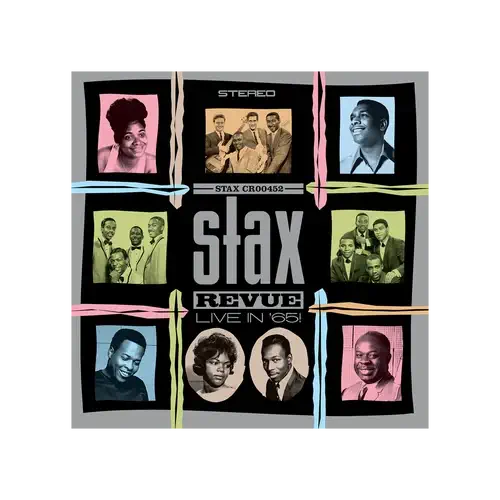

Put on a Stax record and you can hear the difference almost immediately.
The drums don’t sound overly polished. The bass doesn’t sit politely in the background. The horns seem to push their way into the room. The vocals can sound like they’re being pulled straight out of somebody’s chest.
That was the magic.
Stax Records didn’t simply make soul music. It created an environment where soul music sounded different.
The story began in Memphis in the late 1950s when Jim Stewart and his sister Estelle Axton transformed an old movie theater at 926 East McLemore Avenue into the unlikely headquarters of what would become one of America’s most important independent record labels. Originally called Satellite Records, the company became Stax—the name combining Stewart and Axton—in 1961.
From that little building came records that still sound alive more than half a century later.
But here’s what makes ranking the greatest Stax artists so difficult.
Are we judging the singers?
The songwriters?
The performers?
The musicians who created the sound?
Or the artists who changed what soul music could become?
For this countdown, I’m considering all of it: musical greatness, Stax impact, memorable recordings, cultural significance, longevity and the ability to make you stop whatever you’re doing when that song comes through the speakers.
And there were plenty of artists who could have made this list.
William Bell. The Dramatics. The Emotions. The Bar-Kays. Little Milton. Mable John.
But we have ten spots.
Let’s get started.
10. Eddie Floyd
Eddie Floyd didn’t need a complicated formula.
Give him a great groove, a few horns, a sharp lyric and that unmistakable Memphis rhythm section, and he could make a record feel like a party breaking out in the studio.
His signature moment was “Knock on Wood.”
Released in 1966, the song became one of the defining records of the Stax era and eventually attracted dozens of cover versions. Floyd co-wrote it with Steve Cropper, and the combination tells you something important about Stax: the lines between artist, songwriter, producer and musician were often wonderfully blurry.
Cropper wasn’t simply a guitar player in the studio. He was part of the musical architecture.
Floyd wasn’t simply the man singing the words.
He was part of the songwriting machine.
And “Knock on Wood” is a perfect example of why Stax records worked. The rhythm is tight, the horns punch through at exactly the right moments, and Floyd sings with just enough swagger to keep the song from becoming ordinary.
He also wrote or co-wrote other important Stax material, including songs for Otis Redding.
Eddie Floyd may not have had the cultural profile of Otis or Isaac Hayes, but remove him from the Stax story and the picture isn’t complete.
9. Rufus Thomas
Rufus Thomas was not interested in standing still.
He was a singer, dancer, comedian, radio personality, emcee and one of the great entertainers Memphis ever produced.
And he had one of those personalities that simply couldn’t be contained by a record sleeve.
Thomas and his teenage daughter Carla recorded “Cause I Love You”, one of the pivotal early records in the Stax story. The recording helped establish the label as a force in rhythm and blues.
Then Rufus found his groove.
“Walking the Dog.”
Suddenly, everybody was dancing.
Then came “Do the Funky Chicken” and “The Breakdown.”
Rufus was older than many of the artists dominating the charts, but that didn’t matter. He understood something that younger performers sometimes forget: entertainment is part of the job.
Listen to his records and you don’t just hear a singer.
You hear a guy having a blast.
Stax officially described him as the “World’s Oldest Teenager,” and the nickname fit. His records were playful, rhythmic and loaded with personality.
And there’s another reason he belongs here.
Rufus Thomas wasn’t merely a Stax performer.
He was part of the label’s community.
He helped mentor younger Memphis musicians and remained connected to the city long after his biggest records were behind him.
That’s bigger than a hit single.
8. Johnnie Taylor
Johnnie Taylor had something every soul singer needs: he could make a song about complicated adult relationships sound like a conversation happening right next to you.
His breakthrough Stax hit, “Who’s Making Love,” arrived in 1968 and became one of the label’s biggest records.
Taylor wasn’t a novelty act.
He wasn’t trying to dazzle you with vocal gymnastics.
He knew how to sell a lyric.
And that became increasingly important as Stax moved beyond the rough-edged soul of its early years and began exploring funkier, more contemporary sounds.
Taylor’s voice could be smooth when it needed to be and rough around the edges when the lyric demanded it.
That versatility helped him remain relevant through the 1970s.
He also represented an important evolution in Stax’s audience. The label wasn’t frozen in 1965. It was constantly changing along with Black America, R&B radio and popular culture.
Taylor was one of the artists who helped carry Stax into that new era.
7. Albert King
If you’re a guitarist and you’ve never spent time with Albert King, stop what you’re doing.
Seriously.
Go listen to “Born Under a Bad Sign.”
King’s guitar didn’t sound like everybody else’s because Albert King didn’t play guitar like everybody else.
His massive, bent notes seemed to hang in the air. He could make one note feel heavier than another guitarist’s entire solo.
His 1967 album Born Under a Bad Sign became one of the great meeting points between blues and soul.
And that’s exactly why King belongs so high on this list.
He wasn’t simply a blues artist who happened to record for Stax.
He helped connect the blues tradition to the emerging electric soul and rock vocabulary.
Listen to the guitar.
Then listen to the rhythm section.
Then listen to those horns.
That’s Stax.
And King’s influence reached far beyond the label. Guitarists such as Eric Clapton, Jimi Hendrix and Stevie Ray Vaughan absorbed lessons from the blues giants who came before them, and King’s approach became part of that larger electric-blues language.
Stax’s own history identifies King as one of the major artists who helped expand the label’s reach beyond Memphis, bringing in artists from outside the city’s immediate scene.
He didn’t need to shout.
He let the guitar do it.
6. Carla Thomas
Carla Thomas deserves more than a footnote in the Stax story.
She deserves a chapter.
Before Stax became famous around the world, before Otis Redding, before Isaac Hayes and before “Soul Man,” there was a teenage Carla Thomas walking into a Memphis recording studio.
She was only 17 when she recorded “Cause I Love You” with her father, Rufus Thomas. The record helped change the direction of the company, which had initially been focused on country and pop.
Then came “Gee Whiz (Look at His Eyes).”
Thomas had written the song as a teenager, and it became a national hit.
That’s remarkable enough.
But Carla eventually earned her nickname for a reason: the Queen of Memphis Soul.
Her voice wasn’t built around the overpowering drama of Otis Redding.
It had elegance.
She could sound vulnerable without sounding weak, sophisticated without becoming detached.
And then came her collaborations with Otis, including “Tramp.”
That record is pure chemistry.
Otis and Carla tease each other, argue, flirt and trade insults over one of the nastiest grooves Stax ever produced.
It sounds spontaneous.
That’s the trick.
The best Stax records often sound like you’re overhearing something rather than listening to something manufactured.
5. The Staple Singers
The Staple Singers brought something different to Stax.
They brought church.
Not just gospel harmony, but the emotional authority that comes from years of singing about faith, struggle and survival.
Roebuck “Pop” Staples had already established the family group as a respected gospel act before Stax entered the picture.
But at Stax, the Staples Singers became something much larger.
The songs became social.
“Respect Yourself.”
“I’ll Take You There.”
“If You’re Ready (Come Go With Me).”
These weren’t simply soul hits.
They were records connected to a particular moment in American history.
And that’s part of what makes Stax so fascinating.
The label’s greatest records weren’t created in a vacuum. They came out of Memphis during the civil-rights era and continued evolving through a period of enormous social change.
The Staple Singers could take the language of gospel and put it directly into contemporary Black life.
Mavis Staples became the unmistakable voice at the center of that transformation.
Her voice didn’t need decoration.
She could sing a phrase and make it sound like she’d lived every word.
Stax’s own history identifies the Staple Singers among the major artists who helped expand the label during its post-1968 renaissance.
And that brings us to the top four.
Now things get serious.
4. Sam & Dave
If soul music is supposed to make you move, Sam & Dave should be somewhere near the top of the conversation.
They were not subtle.
That wasn’t the point.
“Hold On, I’m Comin’.”
“Soul Man.”
“I Thank You.”
These songs hit like a Saturday night.
Sam Moore and Dave Prater had the kind of vocal chemistry that made their records sound almost competitive. They pushed each other, answered each other and seemed to be trying to out-sing the other guy without ever losing the groove.
Behind them was an extraordinary songwriting and production team.
Isaac Hayes and David Porter wrote many of their biggest hits, while Booker T. & the M.G.’s and the Memphis Horns supplied the musical muscle.
This was the Stax assembly line working at full strength.
But calling it an assembly line doesn’t do it justice.
These records had heat.
The official Stax history notes that Hayes and Porter crafted songs specifically for Stax performers, helping create the label’s distinctive sound. Their partnership with Sam & Dave produced “Soul Man” and “Hold On, I’m Coming.”
And then there was the stage.
Sam & Dave were famously explosive performers.
Their records were great.
Their live shows were something else.
3. Booker T. & the M.G.’s
Here’s where a typical “greatest Stax artists” list can get tricky.
Booker T. & the M.G.’s weren’t just artists on the label.
They were the sound behind the sound.
Booker T. Jones on organ.
Steve Cropper on guitar.
Al Jackson Jr. on drums.
Donald “Duck” Dunn on bass.
Together, they created the rhythmic foundation for an extraordinary number of Stax recordings.
And they had their own hits.
“Green Onions.”
“Time Is Tight.”
“Hip Hug-Her.”
The first time you hear “Green Onions,” the hook is almost ridiculously simple.
That’s why it works.
The organ riff is unforgettable. The guitar is economical. The drums and bass don’t waste a move.
Nobody is showing off.
Everybody is serving the groove.
The group also represented something remarkable in the American South of the early 1960s: an integrated band performing together during a period of intense racial tension.
Stax identifies Booker T. & the M.G.’s as essential to the creation of the Memphis Sound, noting that their playing can be heard on hundreds of recordings by artists including Otis Redding, Carla Thomas, Sam & Dave and Johnnie Taylor.
That’s an almost absurd résumé.
They weren’t merely a backing band.
They were hitmakers.
And without them, Stax doesn’t sound like Stax.
2. Isaac Hayes
Isaac Hayes didn’t just play the Stax game.
He changed the rules.
Before the big hair, sunglasses, chains and deep baritone of the “Black Moses” era, Hayes was one of the people working behind the scenes.
He was a songwriter.
A session musician.
A producer.
An arranger.
And one of the creative engines inside Stax.
He and David Porter formed one of soul music’s great songwriting partnerships, writing hits for Sam & Dave and other Stax artists.
Then Hayes stepped out front.
Hot Buttered Soul arrived in 1969 and sounded like almost nothing else in popular music.
Instead of squeezing songs into two-and-a-half-minute radio packages, Hayes stretched them.
He slowed them down.
He let the groove breathe.
And he turned soul into something cinematic.
Then came “Theme from Shaft.”
Suddenly Isaac Hayes wasn’t simply a soul star.
He was a movie star, composer and cultural figure.
The song won the Academy Award for Best Original Song, making Hayes the first Black recipient of the award in that category. Stax describes him as a Grammy- and Academy Award-winning creative force whose work helped revolutionize soul music.
His importance to Stax is difficult to overstate.
When the label was rebuilding after the loss of its distribution relationship with Atlantic and the death of Otis Redding, Hayes became one of the central figures in its new era. His success with Hot Buttered Soul helped lead the label’s “Soul Explosion” period.
But here’s why he’s number two.
Isaac Hayes didn’t simply make great records.
He expanded the possibilities of soul music.
1. Otis Redding
There is a moment in an Otis Redding performance when the singer seems to stop singing and simply start feeling the song out loud.
That’s the difference.
Lots of singers have power.
Otis had vulnerability.
Lots of singers could scream.
Otis could make the scream sound like a confession.
His Stax recordings—including “These Arms of Mine,” “Try a Little Tenderness” and “(Sittin’ On) The Dock of the Bay”—are among the essential recordings in American soul music.
But Redding’s importance goes beyond the number of hits he made.
He was the emotional center of Stax during its most important years.
The label’s own history calls him perhaps its most treasured star.
And then came the tragedy.
On December 10, 1967, Redding died when the plane carrying him and members of the Bar-Kays crashed into Wisconsin’s Lake Monona. He was only 26.
Imagine what might have happened if he had lived.
That’s one of those questions music history can never answer.
Redding had already begun expanding beyond straight Southern soul. His performance at the Monterey Pop Festival introduced him to a huge rock audience, and his songwriting was becoming more adventurous.
Then came “The Dock of the Bay.”
Released after his death, the song revealed an artist moving somewhere new.
The whistling.
The acoustic guitar.
The quiet melancholy.
The ocean sounds.
It didn’t sound like the Otis Redding of a few years earlier.
And that’s what makes his death so painful.
We didn’t just lose a great singer.
We lost an artist who appeared to be entering another phase of his career.
For all the great voices that passed through Stax, Otis Redding remains the one that seems closest to the bone.
You don’t simply hear Otis Redding.
You feel him trying to hold the song together.
And that’s why he’s my number one.
The Stax Legacy Is Bigger Than a Top 10
The danger with making a list like this is pretending that ten names can somehow contain Stax Records.
They can’t.
Stax was a musical ecosystem.
The singers mattered.
The songwriters mattered.
The musicians mattered.
The producers mattered.
The Memphis Horns mattered.
The people working behind the counter at the record shop mattered.
Even the building mattered.
The label eventually placed more than 167 songs in the Billboard Hot 100 and 243 in the R&B Top 100 during its historic run.
And then there is the music itself.
That’s what survives.
Put on “Green Onions” and the room changes.
Put on “Soul Man” and you want to move.
Put on “Try a Little Tenderness” and suddenly you’re paying attention to every breath Otis Redding takes.
Put on “I’ll Take You There” and Mavis Staples sounds like she’s inviting the entire country to come along.
That’s the real Stax legacy.
It wasn’t polished to perfection.
It was alive.
And maybe that’s why these records still work.
They don’t sound like history.
They sound like people.
So here’s the question: Did we get the top 10 right?
Maybe not.
That’s the fun of a list like this.
William Bell fans will have something to say. The Dramatics deserve a serious argument. The Bar-Kays could make their own countdown. And there are plenty of Stax musicians whose fingerprints are all over the records even when their names weren’t on the front cover.
But if you’re looking for the artists who best tell the story of Stax—from Memphis soul and Southern blues to gospel, funk and cinematic soul—these ten are a pretty good place to start.
Then turn the volume up.
Because Stax was never meant to be studied quietly.
It was meant to be heard.


