
The first time I felt it happening again, I wasn’t at a concert or a record store. I was standing in line for coffee behind two kids who couldn’t have been more than nineteen. One of them was humming — not mumbling, not joking — but fully humming Kate Bush’s “Running Up That Hill.”
I almost dropped my change.
I’ve been writing about music long enough to recognize when something strange and wonderful is underway. You feel it before you can explain it. It’s the same sensation I had in 1977 when punk seeped out of basements, or in 1984 when synthesizers suddenly ruled the radio like chrome-plated gods.
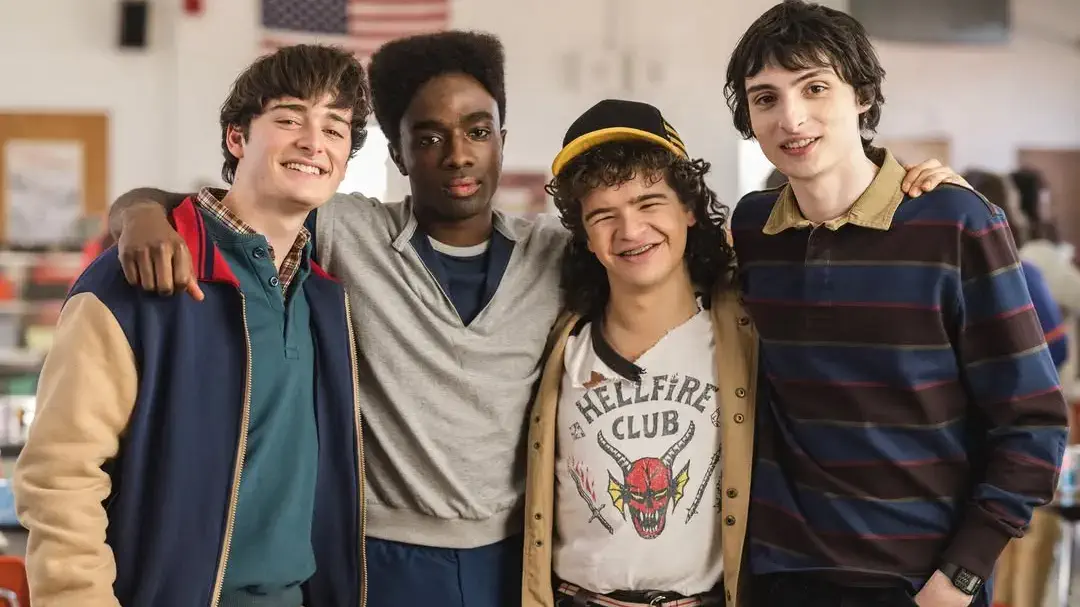
Now it’s happening again. And this time, the gateway drug is a Netflix series about kids on bicycles fighting monsters from another dimension.
With Stranger Things Season 5, the show has done something no marketing department, label executive, or algorithm has managed to pull off in decades: it has made the 1980s feel emotionally alive to a generation that never lived it.
Not ironic.
Not vintage-cool.
Alive.
The Soundtrack as a Time Machine
When the Duffer Brothers first set Stranger Things in 1983, it felt like a stylistic choice — walkie-talkies, BMX bikes, basements filled with Dungeons & Dragons manuals. Cute. Referential. A wink to those of us who remembered the smell of cassette plastic and carpet glue.
But by Season 5, the show isn’t referencing the ’80s anymore. It’s inhabiting them.
The music in this final season doesn’t just appear in the background. It breathes. It pulses through scenes the way radio once pulsed through our lives — always on, always nearby, always shaping memory.
That’s what Gen Z is responding to.
Not the decade itself — but the intimacy.
Back then, music didn’t live in phones. It lived in rooms. In cars. In bedrooms with posters taped to the wall. Songs weren’t content. They were companions.
Season 5 leans into that idea hard.
Characters don’t just hear music — they cling to it. Songs become emotional lifelines. Survival tools. Identity markers. The same way they once were for us.
And Gen Z gets that immediately.
Because despite growing up digitally, they’re starving for something tactile — something that feels chosen rather than served.
When Algorithms Lose to Emotion
Streaming services are built on prediction. They guess what you want next. They optimize. They smooth out surprise.
Stranger Things does the opposite.
When an ’80s song drops in Season 5, it doesn’t feel curated. It feels fated.
A track might arrive at the exact moment a character is terrified, grieving, or finally brave enough to stand up. The song doesn’t decorate the scene — it defines it.
That’s how “Running Up That Hill” came back from the dead years ago, and Season 5 doubles down on that philosophy. Deep cuts appear. Songs you wouldn’t expect. Tracks that once lived quietly on vinyl sleeves now roar back like ghosts demanding attention.
For Gen Z, this isn’t nostalgia.
It’s discovery.
They’re not thinking, Oh, this is old music.
They’re thinking, Why does this feel so real?
Because emotion doesn’t age.
The Shock of Authenticity
I’ve interviewed enough young musicians to know that many of them are exhausted by perfection. Everything today is compressed, corrected, filtered, tightened.
’80s records weren’t like that.
You hear the space in them.
The mistakes.
The breath between notes.
Season 5 lets those imperfections ring.
Analog synths wobble slightly. Drums feel human. Vocals sometimes sound like they’re barely holding together — which is exactly why they work when the story is about kids barely holding themselves together.
Gen Z listeners notice this instantly, even if they don’t have the vocabulary for it yet.
They describe it as “raw.”
Or “honest.”
Or “weirdly emotional.”
We used to call it human.
From Scene to Spotify Obsession
Here’s where things get fascinating.
After Season 5 premiered, something familiar happened — something I hadn’t seen since the days when a movie soundtrack could change radio overnight.
Teenagers didn’t just Shazam the songs.
They went looking.
Playlists titled “Stranger Things vibes” exploded. So did searches for “music that sounds like the 80s,” “sad synth songs,” and “songs like New Order.”
New Order.
That name once belonged to record-store clerks and late-night DJs. Now it’s showing up in the search history of kids who weren’t born until decades after Blue Monday first rattled dance floors.
I’ve seen this before — when a moment cracks open curiosity. When a song doesn’t end with the credits but sends people down a rabbit hole.
That’s how lifelong fans are born.
Not through lectures.
Not through “important albums” lists.
But through feeling.
The Emotional Architecture of the ’80s
One reason the music lands so hard is that ’80s pop — at its best — specialized in emotional contradiction.
Happy melodies. Sad lyrics.
Dance beats hiding heartbreak.
Hope tangled with dread.
That tension mirrors Stranger Things itself.
Season 5 is dark. Apocalyptic. Heavy with loss. But threaded through it is defiance — the stubborn belief that connection still matters.
That was the emotional blueprint of the decade.
We danced while worrying about nuclear war.
We fell in love under fluorescent lights.
We blasted music loud enough to drown out fear.
Gen Z may face different monsters, but the feeling is familiar.
Music that acknowledges darkness without surrendering to it hits like revelation.
Why This Isn’t Just a Trend
Plenty of shows use retro songs. Most get a brief spike and fade.
This feels different.
Because Stranger Things doesn’t treat the ’80s as a costume — it treats it as a worldview.
The show suggests something radical to modern viewers: that music once required effort. That you had to seek it, save for it, rewind it, commit to it.
For Gen Z — raised in abundance — that idea is strangely seductive.
Owning fewer songs, but loving them harder.
That’s not nostalgia.
That’s rebellion.
Watching the Torch Pass
I’ve stood in muddy fields watching Springsteen convert skeptics. I’ve seen Bowie step onstage and rearrange reality. I’ve watched teenagers discover punk, hip-hop, metal — each generation finding its own doorway into sound.
What’s happening now feels quieter — but just as powerful.
It’s happening in bedrooms with headphones on.
In late-night playlist dives.
In conversations that start with, “This song is old, but…”
That “but” matters.
Because after the “but” comes wonder.
And wonder is where music lives.
The Beautiful Irony
Here’s the part that makes me smile.
The ’80s were obsessed with the future. Synths sounded like machines. Album covers looked like neon dreams. We thought tomorrow would arrive wrapped in circuitry.
Instead, the future arrived streaming our past — not as novelty, but as nourishment.
Stranger Things Season 5 didn’t revive ’80s music.
It reminded us why it mattered in the first place.
Because great songs don’t belong to decades.
They belong to moments — whenever someone hears them and feels less alone.
And right now, somewhere, a kid is pressing play on a song recorded before their parents met — and feeling like it was written just for them.
That’s not retro.
That’s eternal.