
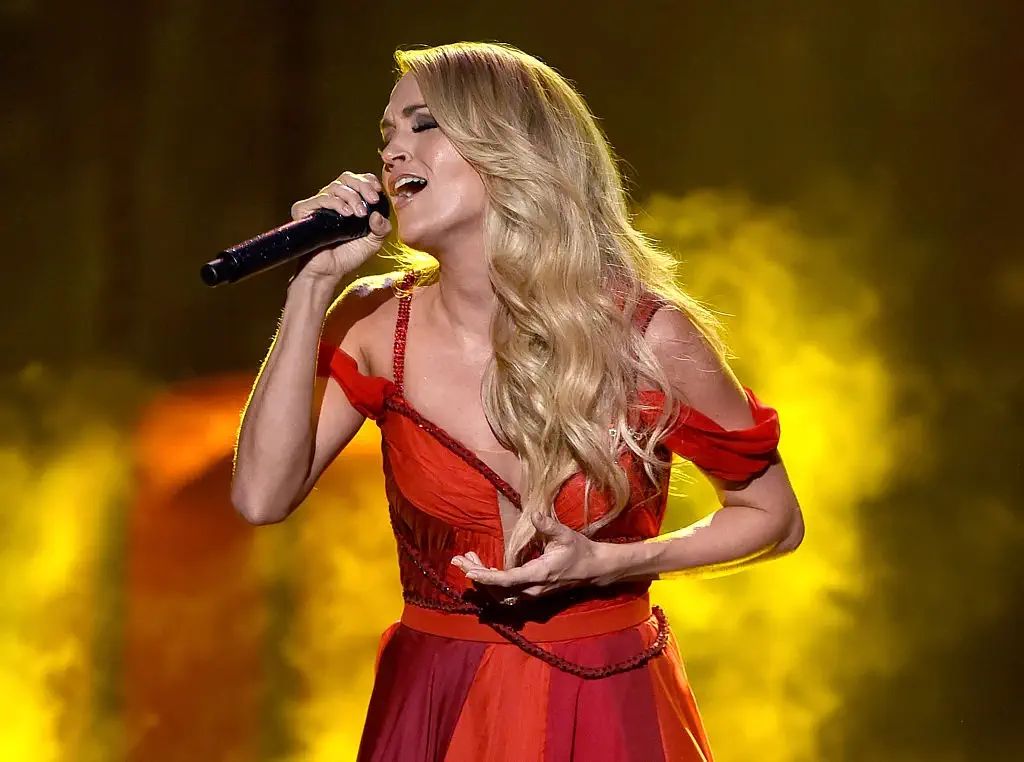

Country music has never had a shortage of women who could stop you in your tracks.
Some had voices that could break your heart with a single note. Others wrote songs that gave women a language for things they had been told to keep quiet. Some conquered country radio. Others crossed into pop, rock, folk and Americana without losing the sound that made them special.
And then there are the artists who changed the definition of what a country singer could be.
That makes naming the 10 greatest female country singers of all time a much tougher job than simply counting No. 1 hits or Grammy trophies.
For this ranking, the standard is broader: vocal ability, songwriting, influence, commercial success, longevity, cultural impact, historical importance and the lasting power of the music. It’s also a judgment call. There are superb artists who could easily make another critic’s top 10.
But these ten made an argument that was impossible to ignore.
10. Faith Hill
Faith Hill arrived in the 1990s with the kind of voice that could fill a country ballad without ever sounding forced.
Then came “This Kiss.”
Suddenly, Hill wasn’t simply a country singer. She was a crossover star.
Her 1998 album Faith established her as a major force, while Breathe pushed her even further into the mainstream. The title song became one of the defining country-pop records of its era, and Hill’s polished delivery made the transition from country radio to pop radio look almost effortless.
She also proved she wasn’t dependent on crossover hits. Songs such as “There You’ll Be,” “Mississippi Girl” and “The Way You Love Me” showed different sides of her range.
Hill’s Grammy résumé backs up the commercial success. She has won five Grammys, including Best Country Album for Breathe and Best Female Country Vocal Performance for “Breathe.”
She doesn’t rank higher here because her career doesn’t carry quite the same historical weight as the women above her.
But when the conversation turns to the biggest female country stars of the 1990s and early 2000s, Faith Hill absolutely belongs in it.
9. Emmylou Harris
Emmylou Harris took a different road.
She didn’t need enormous pop hits to change country music. Her influence came through taste, musicianship and an almost uncanny ability to find great songs before everyone else did.
Harris could move from traditional country to folk, bluegrass and what would eventually become known as Americana without making the transitions feel artificial.
Her early recordings demonstrated an extraordinary musical curiosity. She recorded songs associated with artists including the Louvin Brothers, Buck Owens, Patsy Cline and Loretta Lynn while also helping bring attention to songwriters such as Rodney Crowell and Jesse Winchester.
And then there was the Hot Band.
Harris surrounded herself with exceptional musicians, including James Burton and Albert Lee, while giving future stars such as Rodney Crowell and Ricky Skaggs valuable exposure.
Listen to “Boulder to Birmingham” today and the reason for her reputation becomes obvious. There is sadness in the performance, but never melodrama.
Harris didn’t simply sing country music.
She expanded its borders.
8. Carrie Underwood
When Carrie Underwood won American Idol in 2005, it would have been easy to dismiss her as another television-made star.
That would have been a mistake.
Underwood had the voice to back it up.
“Jesus, Take the Wheel” immediately announced a singer capable of moving from tenderness to full-throated power. “Before He Cheats” showed another side entirely—angry, playful and almost gleefully vengeful.
Then came “Blown Away,” one of the best examples of Underwood using her vocal range as part of the drama of a song.
Her Grammy record is impressive: eight wins and 16 nominations listed by the Recording Academy.
But statistics only tell part of the story.
Underwood helped keep the big country voice alive in an era when Nashville was increasingly experimenting with pop, rock and electronic production.
She can sing quietly.
She can sing gospel.
And when she opens up that voice, she can absolutely blow the roof off a building.
7. Martina McBride
If vocal power were the only criterion, Martina McBride might be several places higher.
Few singers on this list could take a song like “Independence Day” and make every word sound like it mattered.
McBride became particularly associated with songs about women confronting difficult circumstances. “A Broken Wing,” “Concrete Angel” and “This One’s for the Girls” showed a singer who understood that country music’s emotional strength often comes from telling uncomfortable stories plainly.
Her first Grammy nomination came for “Independence Day,” and she continued receiving nominations across more than a decade.
There was no mistaking the instrument.
McBride’s voice had size, clarity and emotional force. But perhaps more importantly, she knew when to unleash it and when to pull back.
That’s a difficult trick.
A great singer isn’t simply someone who can hit the high note. A great singer knows why the high note belongs there.
McBride did.
6. Tammy Wynette
Before there was social media, before women had today’s platforms for telling their stories, Tammy Wynette was putting complicated women’s lives onto country radio.
And sometimes she did it with three words:
“Stand by Me.”
Well, actually, “Stand by your man.”
The distinction matters because the song remains one of the most debated recordings in country history.
Wynette’s appeal was never simply about vocal technique. It was about identification. Her songs frequently dealt with marriage, divorce, loneliness, sacrifice and survival from a woman’s perspective.
The Country Music Hall of Fame describes Wynette as one of the defining stylists and songwriters of the late 1960s and early 1970s, particularly for articulating women’s perspectives with an autobiographical quality.
Songs such as “D-I-V-O-R-C-E,” “I Don’t Wanna Play House” and “Stand by Your Man” turned ordinary domestic problems into major country stories.
Wynette didn’t always make the answers comfortable.
She made them recognizable.
That is a different kind of greatness.
5. Shania Twain
Then Shania Twain came along and kicked open a much bigger door.
Country music had crossed over before. But Come On Over didn’t merely cross over.
It practically took over.
Released in 1997, the album produced a remarkable run of songs, including “You’re Still the One,” “That Don’t Impress Me Much,” “From This Moment On” and “Man! I Feel Like a Woman!”
The production was polished, the hooks were enormous and the videos were tailor-made for the MTV era.
Suddenly country music wasn’t just something you heard on country radio.
It was everywhere.
Come On Over eventually sold roughly 40 million copies worldwide and remains the best-selling country album, according to Guinness World Records.
That number is staggering.
But the more important achievement may have been what Twain made possible.
She proved that a woman could be glamorous, playful, sexy, funny and completely in control while still commanding country music’s audience.
Shania changed the size of the room.
4. Reba McEntire
Reba McEntire’s greatest achievement might be longevity.
Not just staying famous.
Staying relevant.
For decades.
Reba emerged from the traditional country world, developed into one of Nashville’s most recognizable stars and eventually became a television and entertainment personality without abandoning her musical identity.
Her recordings include “Fancy,” “The Night the Lights Went Out in Georgia,” “Is There Life Out There” and countless other hits that became part of the country’s musical vocabulary.
But there’s another reason Reba belongs this high.
She understands character.
Give her a song about a woman down on her luck, a woman fighting back or a woman making a questionable decision, and she doesn’t simply sing the lyrics.
She inhabits them.
That’s especially apparent on “Fancy,” where Reba turns a dramatic story into something theatrical without losing the grit underneath.
Her career also illustrates something important about country music: the biggest stars aren’t always the singers with the most technically perfect voices.
Sometimes they’re the singers who know exactly who they are.
Reba has known that for a very long time.
3. Patsy Cline
Patsy Cline’s career is one of the great “what if?” stories in American music.
She died in a plane crash in 1963 at just 30 years old.
Yet more than six decades later, her voice remains instantly recognizable.
That’s remarkable.
Cline didn’t have decades to build her legacy. She didn’t have stadium tours, a massive catalog or a long string of albums to reinforce her reputation.
She had the voice.
And she had songs.
“Crazy,” “I Fall to Pieces,” “Walkin’ After Midnight” and “Sweet Dreams” became part of the permanent country songbook.
The Country Music Hall of Fame calls her the first solo female artist elected to the institution and notes that her unique, crying vocal style established her as the quintessential torch singer.
That’s the key to Cline.
She didn’t sing heartbreak like an actress pretending to be sad.
She sounded like she’d been there.
Listen to “Crazy.” The phrasing is almost conversational. She doesn’t oversell the emotion.
She lets the melody do the work.
And somehow, that makes it hurt even more.
2. Loretta Lynn
Loretta Lynn didn’t just sing about the lives of women.
She wrote about them.
That distinction is enormous.
“Coal Miner’s Daughter,” “You Ain’t Woman Enough,” “Don’t Come Home A-Drinkin’” and “The Pill” gave country music something it desperately needed: a woman’s perspective that wasn’t cleaned up for polite company.
Lynn came from rural Kentucky and transformed those experiences into songs that millions of people recognized as their own lives.
She could be funny.
She could be angry.
She could be vulnerable.
And she could be downright fearless.
Her songwriting helped change what women were allowed to say in country music.
That legacy is bigger than record sales or awards.
When a woman walked into a recording studio after Loretta Lynn and demanded that her own experiences be taken seriously, Lynn had already helped clear a path.
That’s why she sits at No. 2.
But there is still one woman ahead of her.
1. Dolly Parton
If you wanted to build the perfect country music résumé, you could spend your entire life trying to assemble what Dolly Parton accomplished.
Singer.
Songwriter.
Hitmaker.
Entertainer.
Actor.
Businesswoman.
And perhaps most importantly, storyteller.
Parton’s songs can be devastatingly simple.
“Coat of Many Colors” turns poverty and childhood embarrassment into a story about pride.
“Jolene” takes jealousy and desperation and turns them into one of the most recognizable songs in American music.
“I Will Always Love You” proves that a song doesn’t need complicated language to carry enormous emotional weight.
And “9 to 5” showed that Parton could take a social issue, put it inside a brilliant pop-country hook and send it into the mainstream.
Her songwriting is the real secret weapon.
Parton wasn’t merely a gifted interpreter of other people’s material. She built much of her legacy from songs she wrote herself.
The Songwriters Hall of Fame notes that she originally wrote “I Will Always Love You” as a farewell to Porter Wagoner, and the song reached No. 1 on the country chart in 1974.
Her catalog has also repeatedly crossed genre boundaries.
Whitney Houston transformed “I Will Always Love You” into one of the biggest pop ballads ever recorded. Other artists have returned to Parton’s songs again and again because the writing is strong enough to survive radically different arrangements.
And then there’s the sheer longevity.
Parton’s music has connected with multiple generations, from people who bought her records on vinyl to listeners discovering her songs through streaming playlists and movie soundtracks.
Her official site says she has sold 100 million records worldwide, while her career has earned recognition from the Country Music Hall of Fame, Songwriters Hall of Fame and Rock & Roll Hall of Fame.
But numbers still don’t completely explain Dolly.
There is something else.
She made being unmistakably Dolly Parton into a career strategy.
The hair.
The clothes.
The laugh.
The voice.
The rhinestones.
The wit.
And beneath all of it, an extraordinary songwriter who understood people.
That’s why she is No. 1.
The Crown Belongs to Dolly—But the Argument Doesn’t End Here
The fun of a list like this is that the debate begins after the countdown ends.
What about Tammy Wynette’s contemporary Dottie West? Where does Patsy Cline belong if vocal influence matters more than longevity? Should Emmylou Harris rank higher because of her influence on Americana? And what about later stars such as Miranda Lambert, Trisha Yearwood, Alison Krauss or Taylor Swift, whose country roots and songwriting have reshaped the conversation?
Those arguments are exactly what make country music so rich.
There isn’t one definition of greatness.
Some singers changed the sound.
Some changed the business.
Some changed what women could say in a country song.
And some simply opened their mouths and made you stop whatever you were doing to listen.
Dolly Parton managed to do nearly all of it.
That’s why, when the question is who is the greatest female country singer of all time, Dolly has perhaps the strongest case of them all.
But put these ten women in a jukebox, turn it up, and suddenly the ranking seems a lot less important.
The songs are what remain.
And these women left us a whole lot of them.
Continue the journey through the stories, careers and music of the artists who shaped our lives at SoundbiteBio.com.


