


I remember the first time I heard “What’s Up?” it didn’t feel like a hit. It felt like someone cracking a window open.
It was the early ’90s, that strange in-between moment when hair metal was finally wheezing its last breath and alternative radio was still trying to figure out what it stood for. Grunge was loud, angry, male, and flannel-heavy. Pop was glossy and calculated. And then this song came on—slow-burning, awkward, emotionally exposed—and the voice at the center of it didn’t ask for permission.
Three chords. A rising chant. A howl that sounded like it had been building for years.
And now, more than three decades later, that same howl is back—clipped, looped, mashed up, and blasted through phone speakers—sitting at No. 1 on TikTok, igniting millions of posts from a generation that wasn’t even born when the song first landed.
That’s the strange magic of 4 Non Blondes.
The Song That Wouldn’t Disappear
“What’s Up?” was released in 1992, tucked inside Bigger, Better, Faster, More!, the band’s only album. Even back then, it felt like an accident that became a phenomenon. The song wasn’t slick. It didn’t have a hook engineered by committee. It didn’t even have a traditional chorus. What it had was urgency.
Linda Perry wrote “What’s Up?” alone, sitting with a guitar and the familiar ache of not knowing where you fit in. Perry has said she originally titled the song “What’s Going On?”—a nod to Marvin Gaye—but changed it to avoid confusion. Ironically, decades later, confusion would be the song’s secret weapon. People didn’t always know what it meant. They just knew how it felt.
And that feeling? It was frustration without bitterness. Confusion without collapse. Hope that hadn’t fully learned how to articulate itself yet.
“I try all the time in this institution,” Perry sang, stretching the word try like it might break. “And I pray, oh my God, do I pray…”
That line alone carried the weight of a thousand bedrooms, a thousand late nights, a thousand kids staring at ceilings wondering if adulthood was a trick they’d been left out of.
Linda Perry and the Sound of Not Fitting In
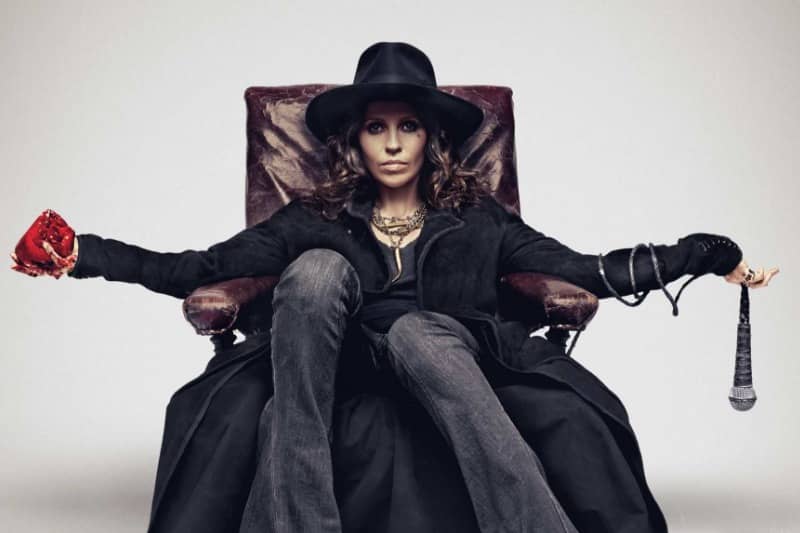
Linda Perry didn’t look like a rock star in the traditional sense, and that was the point. She wore thrift-store clothes, combat boots, and that iconic top hat that felt less like fashion and more like armor. She wasn’t selling sex appeal. She was selling truth, or at least her version of it.
I’ve interviewed plenty of artists who knew exactly who they were from day one. Perry wasn’t one of them. She was restless, searching, and visibly uncomfortable with the machinery of fame even as it started grinding in her direction. “What’s Up?” made 4 Non Blondes massive almost overnight, and you could feel the tension immediately. This was not a band built for endless promotion cycles and smiling photo shoots.
The irony is that the song’s success mirrored its message. “What’s Up?” was about trying to find meaning in a system that didn’t quite fit—and suddenly, the system wanted to turn it into a slogan.
A One-Album Band That Left a Permanent Mark
4 Non Blondes didn’t stick around long enough to become a legacy act. They released one album, toured, and then quietly fractured. In rock history, that usually relegates a band to footnote status.
Except “What’s Up?” refused to fade.
It lived on through radio rotations, karaoke bars, movie soundtracks, and those strange moments when a song catches you in a grocery store and suddenly you’re 22 again, emotionally naked in aisle five.
What made it last was its lack of specificity. The lyrics never pinned themselves to a place, a person, or even a clear storyline. Instead, they hovered in that universal space between confusion and conviction. Everyone could pour their own meaning into it.
And now TikTok has done what it does best: stripped the song back to its emotional core and handed it to millions of new interpreters.
TikTok, Mashups, and the Second Life of a Song
The current resurgence didn’t start with nostalgia. It started with a mashup—one of those unexpected collisions TikTok thrives on, where an old song meets a new context and sparks recognition.
Suddenly, that opening verse was underscoring videos about burnout, identity, gender, politics, mental health, coming out, growing up, growing disillusioned. The chorus—once belted by Gen X kids staring at MTV—became a communal scream for Gen Z, filtered through irony and sincerity at the same time.
That’s the thing about TikTok: it doesn’t care about legacy. It cares about resonance. If a song fits the moment, it lives. If it doesn’t, it disappears.
“What’s Up?” fit perfectly.
The platform turned the song into a kind of emotional shorthand. You didn’t need to explain yourself. You just needed that “And I say, hey-ey-ey…” and people understood.
Why the Song Hits Harder Now
In 1992, “What’s Up?” was a question shouted into the void.
In 2026, it sounds like a diagnosis.
We’re living in a time of constant connection and persistent disorientation. Everyone’s talking, no one’s listening, and the future feels permanently under construction. Perry’s lyric—“I realized quickly when I knew I should / That the world was made up of this brotherhood of man”—lands differently now. It sounds hopeful and naïve and heartbreaking all at once.
The song doesn’t offer answers. It never did. What it offers is recognition.
That’s why it works in short clips, in loops, in fragments. It was never about resolution. It was about release.
Linda Perry’s Long Shadow
There’s another layer to the resurgence that feels poetic. Linda Perry went on to become one of the most successful songwriters and producers of the last 25 years, shaping hits for Pink, Christina Aguilera, Gwen Stefani, and Alicia Keys. She became the architect behind other people’s voices, often helping them articulate their own versions of confusion, power, and self-definition.
But “What’s Up?” remains her most naked statement. No filters. No polish. Just a voice cracking under the weight of trying to matter.
Watching it return now feels like the song finally landing where it always belonged—not as a novelty, not as a ’90s relic, but as a living document.
The Accidental Anthem That Keeps Finding Us
I’ve seen a lot of songs come back around. Most do it through nostalgia tours and anniversary box sets. “What’s Up?” came back because people needed it again.
That’s the difference.
The song doesn’t belong to the ’90s anymore. It belongs to anyone who’s ever woken up feeling slightly out of step with the world and brave enough to say it out loud. TikTok didn’t resurrect it—it recognized it.
And maybe that’s the final irony. A song written by someone who didn’t feel like she fit anywhere has become a connective thread across generations, genders, platforms, and cultures.
Thirty-plus years later, Linda Perry is still asking the same question.
And millions of people are still singing along, because they’re still trying to figure it out too.


![Why Gen Z is Obsessed with 1970s [Genre: Funk/Soul/Disco/Glam Rock].](https://i3.wp.com/cdn.pixabay.com/photo/2017/07/27/12/40/sommerfest-2545191_960_720.jpg?w=300&resize=300,150&ssl=1 "Why Gen Z is Obsessed with 1970s [Genre: Funk/Soul/Disco/Glam Rock].")

