
The Pulse of a Generation: How #1 Hits Forged a Disco Empire
Introduction
There are moments in music history when everything shifts at once. The mid-1970s was one of those moments.
Rock had grown bigger, louder, and more theatrical. Punk was beginning to snarl in the shadows. But somewhere else—under mirrored balls and neon lights—another sound was rising.
Disco didn’t knock on the door. It kicked it open.
I remember walking into a club in New York in the late ’70s—bass thumping like a second heartbeat, bodies moving as one organism, sweat and light and rhythm blending into something almost spiritual. And what powered that room wasn’t just a DJ—it was a string of songs that had climbed all the way to #1.
These weren’t just hits. They were blueprints.
Artists like Bee Gees and Donna Summer weren’t just making music—they were building a world. A place where, for a few hours, nothing mattered but the beat.
And once that beat took hold, it never really let go.
The Anatomy of a #1 Disco Machine
Every great movement has its formula. Disco had its own kind of science—equal parts rhythm, emotion, and precision.
At the center of it all was the beat. That famous “four-on-the-floor” pulse—steady, relentless, impossible to ignore. It didn’t just ask you to dance. It demanded it.
Around that beat, producers layered sound like architects building something grand. Strings swept in like waves. Horns punched through with bright, brassy confidence. The bassline locked everything together, deep and hypnotic.
Guitars? They stayed in the pocket. Tight. Controlled. Rhythm over flash.
And then came the voice.
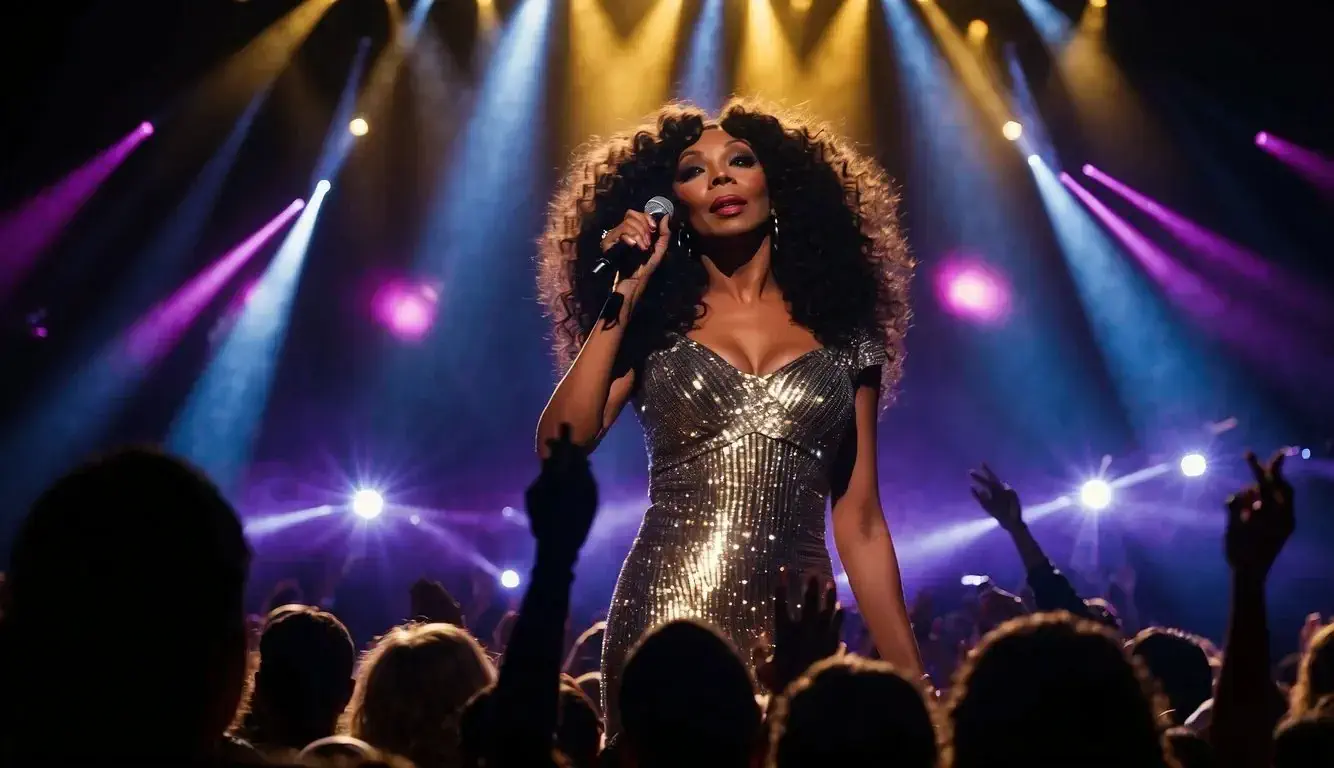
Donna Summer turned vocals into atmosphere—breathy, intimate, almost cinematic on tracks like “Love to Love You Baby.” Meanwhile, Gloria Gaynor brought power and resilience, especially on “I Will Survive,” a song that felt like both a personal statement and a universal anthem.
But if disco had a royal family, it was the Bee Gees.
They reinvented themselves in real time. Their falsetto harmonies became hooks as sharp as any guitar riff. Songs like “Stayin’ Alive,” “Night Fever,” and “Jive Talkin’” didn’t just climb the charts—they owned them.
Behind the scenes, producers like Giorgio Moroder pushed things even further. With tracks like “I Feel Love,” Moroder introduced synthesizers and sequencers in a way that felt futuristic, almost otherworldly.
Suddenly, disco wasn’t just organic—it was electronic.
And every element had one goal: keep the dance floor moving.
The Cultural Tsunami: More Than Just Music
Disco wasn’t just a sound. It was a lifeline.
It grew out of communities that didn’t always have a voice—Black, Latino, and LGBTQ+ spaces where music became a form of freedom. Clubs like The Loft and Paradise Garage weren’t just venues. They were sanctuaries.
On those dance floors, identity shifted. It loosened. It opened up.
In a decade marked by political distrust and economic uncertainty—post-Watergate scandal America—disco offered escape. Not denial, but release.
And when those underground sounds broke into the mainstream, something powerful happened.
A #1 disco hit didn’t just dominate radio—it carried that message outward. Into suburban homes. Into small towns. Into places that had never seen a dance floor like that.
Nothing captures that moment better than Saturday Night Fever soundtrack.
It wasn’t just an album. It was a phenomenon.
The music, the fashion, the attitude—it all came together. Suddenly, disco wasn’t underground anymore. It was everywhere.
The Backlash and the Beyond: The Unkillable Groove
When something gets that big, that fast, there’s always a reaction.
By the end of the decade, disco had become a target. The infamous Disco Demolition Night in Chicago wasn’t just a publicity stunt—it was a symbol of something deeper.
There was resistance to the music, yes. But there was also resistance to what the music represented.
The charts shifted. The #1 hits slowed. And on the surface, it looked like disco had burned out.
But here’s the thing about great music—it doesn’t disappear. It transforms.
Disco didn’t die. It went underground. And from there, it reshaped everything.
Hip-Hop and Sampling
In the Bronx, early hip-hop DJs began looping breaks from disco records. Tracks like “Good Times” by Chic became the foundation for a new genre.
Those grooves turned into beats. Those beats turned into movements.
Pop Music Architecture
Listen to Michael Jackson or Madonna, and you’ll hear disco’s DNA everywhere.
The rhythm. The structure. The hooks.
It’s all there. Just evolved.
The Modern Revival
Fast forward to today, and disco is back—again.
Artists like Daft Punk, Bruno Mars, and Dua Lipa have embraced the groove, bringing it to a new generation.
Songs like “Get Lucky” and “Don’t Start Now” aren’t throwbacks—they’re continuations.
Proof that the formula still works.
Conclusion: The Eternal Dance Floor
Disco wasn’t a trend. It was a turning point.
Those #1 hits from 1975 to 1979 didn’t just dominate charts—they changed how music feels, how it moves, how it connects people.
They built something temporary, yes—a glittering world of lights and sound. But the impact? That’s permanent.
Every time a beat drops in a club. Every time a chorus lifts a crowd. Every time a song makes you forget where you are for just a second—that’s disco.
Still alive. Still moving. Still pulling us together.
Because in the end, that’s what it was always about.
Not just music.
Connection.
Frequently Asked Questions (FAQs)
Q: Why was there such a strong backlash against disco?
A: The backlash was complex. It involved cultural resistance, but also deeper issues like racism, homophobia, and discomfort with disco’s roots in marginalized communities. Events like Disco Demolition Night highlighted these tensions.
Q: Did disco disappear after the 1970s?
A: Not at all. Disco evolved into new genres like house and techno, especially in cities like Chicago and Detroit. Its influence has never faded.
Q: What are some essential disco hits?
A: Classics include songs by Donna Summer, Bee Gees, Chic, and Gloria Gaynor—tracks that defined the era.
Q: Are there modern disco artists today?
A: Yes. Many artists continue to create disco-inspired music, blending classic grooves with modern production techniques.
Q: Why is disco still important today?
A: Because its core elements—rhythm, emotion, and connection—are timeless. Disco laid the foundation for much of today’s pop and dance music.