

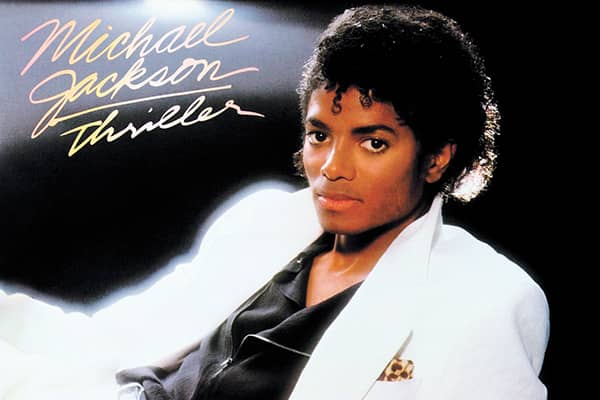

The global phenomenon of Thriller (1982) cast a long, daunting shadow. For any artist, following the best-selling album of all time would be a colossal challenge. For Michael Jackson, it became the catalyst for his most daring, sophisticated, and artistically uncompromising era. Moving far beyond the pedigree of “King of Pop,” the period from the late 1980s through the early 1990s represents a profound creative awakening—a conscious shedding of his past to forge a new, complex sonic and visual identity. This was not a quest for more hits, but a sustained exploration into the cutting edge of technology, global rhythms, personal vulnerability, and social commentary, all filtered through an increasingly personal and perfectionist lens.
The Authoritarian Vision of Bad (1987)
If Thriller was a masterclass in collaboration ( Quincy Jones, Rod Temperton, etc.), Bad was the declaration of Michael Jackson as a sole auteur. He assumed total production control, co-producing every track and writing or co-writing nine of its 11 songs. The album’s title track and the cinematic “Smooth Criminal” revealed a new, harder-edged persona—a streetwise antihero far removed from the romantic moonwalker of “The Girl Is Mine.”
Technologically, Bad pushed boundaries. The iconic “Bad” video, directed by Martin Scorsese, was a gritty 18-minute short film. “Leave Me Alone” employed early forms of digital distortion and animation to skewer the invasive media. Most importantly, the album embraced a muscular, stadium-ready rock sound (“Dirty Diana,” “Smooth Criminal”) seamlessly fused with funk and pop, proving Jackson could dominate rock radio without sacrificing his core identity. Lyrically, themes of isolation, paranoia, and defiant self-assertion began to surface, hinting at the psychological depths to come.
The Dangerous Leap: Synesthesia and Social Conscience (1991)
Dangerous is the undisputed crown jewel of this creative epoch. Teaming with the young, innovative producer Teddy Riley, Jackson didn’t just adopt the new jack swing sound—he revolutionized it, embedding it within dense, cinematic soundscapes. The album is a landmark of sonic textures: the tense, slashing guitar in “Jam,” the aquatic synths of “In the Closet,” the hazy, psychedelic outro of “Give In to Me,” and the groundbreaking, rhythmically complex “Heal the World” and “Will You Be There.”
This was Jackson the sonic architect. He utilized the then-revolutionary Synclavier and cutting-edge sampling to build tracks layer by layer, creating a palpable sense of space and atmosphere. Thematically, Dangerous was a quantum leap. While still containing romance (“Remember the Time,” “Who Is It”), it was dominated by urgent social commentary. “Black or White” addressed racial unity with a raw acoustic guitar bite. “Heal the World” was a plea for environmentalism. “Why You Wanna Trip on Me” directly attacked media sensationalism and societal neglect of real crises like homelessness and AIDS.
The accompanying “Black or White” video, directed by John Landis, was a technical marvel for its morphing special effects. However, it was the short films for “Jam” (featuring basketball legend Michael Jordan) and “Remember the Time” (an elaborate Egyptian fantasy from John Singleton) that redefined the music video as a legitimate, high-budget art form, rivaling Hollywood in scope and budget.
The Visual Symphony and Theatrical Ambition
Jackson’s creativity was never confined to audio. His vision extended to every visual detail. The Dangerous era saw him collaborating with iconic fashion designers like John Galliano and Rick Owens, crafting a new uniform of militaristic jackets, ornate single gloves, and dramatic silhouettes that made him look like a timeless, futuristic monarch.
His staging for the 1993 Super Bowl halftime show was a seismic event. By performing before 133.4 million viewers, he transformed the halftime from a quaint curiosity into a global spectacle every artist would covet. The show was a meticulously choreographic blend of his classic hits and the new Dangerous material, proving his power as a live performer was undimmed. This period also saw the tragic cancellation of the massive, multi-city Dangerous world tour in 1993 due to health and legal controversies. The sheer scale of that planned production—with its $100-million budget, flying stages, and massive video screens—remains a legendary “what if,” a testament to an ambition that redefined touring itself.
The Human Complex: Vulnerability and Scrutiny
Paradoxically, as his artistic control grew, so did his personal vulnerability. The same media that anointed him now dissected his appearance, his pet chimpanzee Bubbles, and his reclusive lifestyle. Songs like “Leave Me Alone” and “Why You Wanna Trip on Me” were direct, anguished responses. This era captures the moment Michael Jackson, the man, became inextricably fused with Michael Jackson, the myth. The creative output became a battleground where his artistic genius, humanitarian ideals, and personal pain collided. The poignancy of ” Gone Too Soon,” a ballad for Ryan White, or the spiritual yearning of “Will You Be There” carries a weight informed by the intense public pressure he was under.
His work with filmmakers like John Landis (“Thriller,” “Black or White”) and Steven Spielberg (the unrealized “Captain EO” sequel) showed his desire to be part of the cinematic tradition, not just the music video world. He was attempting to build a multimedia empire, from film to theme park attractions (“Captain EO,” the soon-to-be “Michael Jackson’s Neverland”), designing immersive experiences that extended his artistic universe.
Conclusion: The Unfinished Symphony
The post-Thriller creative era is Michael Jackson’s most profound statement as an independent artist. It is characterized by a fearless embrace of new technology, an expansion into global and social spheres, and an unflinching confrontation with his own public mythology. While marred by personal turmoil, the artistic output from Bad through the initial Dangerous rollout remains remarkably cohesive and adventurous. It represents the peak of his ability to synthesize pop, rock, funk, and soul into something entirely new, all while maintaining a melodic genius that was uniquely his. This period doesn’t just follow Thriller; it completes the journey by showing the artist who dared to use his unprecedented platform to probe deeper, innovate relentlessly, and ultimately, reveal the complex humanity behind the icon. The “untold story” is that this era of maximum creative control was also one of maximum personal exposure, making the art itself a more resonant, if bittersweet, achievement.
Frequently Asked Questions
Why is the Dangerous album often considered underrated compared to Thriller?
Dangerous is less immediate and more sonically complex than Thriller. Its new jack swing and industrial textures were ahead of their time and took longer for mainstream audiences to digest. While Thriller is a near-perfect pop consolidation, Dangerous is a riskier, more personal artistic statement that prioritizes mood and message over universal, instant hooks. Its critical reputation has grown immensely over time as its innovative production has been widely acknowledged.
What was the significance of Teddy Riley’s collaboration?
Teddy Riley was the architect of new jack swing. His partnership with Jackson on Dangerous was crucial because he brought a contemporary, hard-hitting rhythmic vocabulary that revitalized Jackson’s sound. Jackson, in turn, applied his pop sensibility and meticulous production style to Riley’s beats, creating a hybrid that was gritty yet melodic, streetwise yet grand. It prevented Jackson from sounding like he was chasing trends and instead made him sound like he was setting them.
How did Michael Jackson’s control over his music change after Thriller?
On Thriller, Quincy Jones was the dominant producer and guiding force. For Bad and Dangerous, Jackson took the reins as executive producer and primary creative director. he chose collaborators (Riley, Bill Bottrell, Bruce Swedien), dictated song choices, and oversaw every detail of mixing and sequencing. This resulted in a more consistent, idiosyncratic, and sometimes darker sonic world that reflected his personal tastes and concerns more directly than ever before.
What was the intended impact of the social messages in songs like “Black or White” and “Heal the World”?
Jackson used his global platform to address issues he felt passionately about. “Black or White” was a direct, simple plea for racial harmony, its video controversially edited to remove a segment where he destroyed a car—a metaphor for destroying stereotypes. “Heal the World” was an environmental and humanitarian anthem, tied to his Heal the World Foundation. These songs were not afterthoughts; they were central to his mission to use fame for positive change, a core part of his artistic identity that became more pronounced in this era.
How did the intense media scrutiny of this period affect his creativity?
The scrutiny acted as both a stimulant and a burden. It fueled directly confrontational songs like “Leave Me Alone” and “Why You Wanna Trip on Me.” It also seemed to accelerate his desire for control and perfectionism in the studio, a place where he could construct a flawless reality. However, the mounting stress, health issues, and legal battles ultimately curtailed the tour and cast a long shadow over the latter half of the Dangerous cycle, making the pure, joyful creativity of the earlier songs feel increasingly distant from his lived experience.


![Why Gen Z is Obsessed with 1970s [Genre: Funk/Soul/Disco/Glam Rock].](https://i3.wp.com/cdn.pixabay.com/photo/2017/07/27/12/40/sommerfest-2545191_960_720.jpg?w=300&resize=300,150&ssl=1 "Why Gen Z is Obsessed with 1970s [Genre: Funk/Soul/Disco/Glam Rock].")
