

There are songs that feel like they were written for the charts, and then there are songs that feel like they were written for a moment—a quiet room, low lights, two people suspended between what’s happening and what’s about to. Major Harris’ “Love Won’t Let Me Wait” belongs firmly in the second category. It isn’t just one of the sexiest songs ever made. It’s one of the most patient, and patience, when done right, is devastatingly erotic.
By the time the song drifted out of radios in 1975, it sounded like it had been alive forever. It didn’t chase trends. It didn’t shout. It leaned back, confident, knowing that if you gave it three minutes, it would take care of the rest.
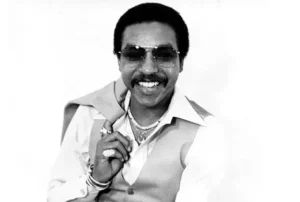
Major Harris was never meant to be a solo star—at least not on paper. Born in Richmond, Virginia, he came up singing gospel, like so many great soul voices, learning early that feeling mattered more than volume. He moved through the industry quietly, doing the work, paying his dues, most notably as a member of The Delfonics, one of Philadelphia soul’s crown jewels. The Delfonics specialized in romantic elegance—strings like silk scarves, harmonies that brushed against you instead of grabbing hold.
Harris fit right in. His voice had that rare quality: vulnerable without being weak, tender without being soft. But as the ’70s rolled on, the group splintered, as groups do. And suddenly Major Harris was standing alone at the microphone.
What followed was lightning.
“Love Won’t Let Me Wait” emerged from the Philadelphia soul machine—written by Bobby Eli and Vinnie Barrett, produced with that unmistakable Philly polish. This was the era of Gamble and Huff, of lush orchestration and emotional clarity, when soul music understood that sensuality didn’t need to be explicit to be powerful. It just needed to be true.
From the first line, the song establishes its stance.
“I’ve been watching you for quite a long time…”
No aggression. No urgency. Just observation. This is a man who’s already done the math, who knows that desire grows best when it’s allowed to breathe. Harris sings like he’s letting you in on a secret he’s been carrying too long.
And then there’s the groove. That slow, deliberate tempo doesn’t move forward so much as it settles. The bassline wraps around the song like an arm around a waist. The strings don’t soar—they sigh. Everything about the arrangement supports the central idea: waiting is unbearable, but it’s also delicious.
What made the song revolutionary wasn’t what it said—it was how it felt. This wasn’t bedroom bravado. This was the ache of anticipation. Harris doesn’t demand love. He confesses that it’s already taken over. Love won’t let him wait—not because he’s impatient, but because the feeling has grown too real to ignore.
When the song hit, it hit hard. It climbed the R&B charts and crossed over, becoming a staple of late-night radio. DJs knew exactly when to play it—after midnight, when voices drop and windows are cracked open just enough to let the night in. It became a slow-dance anthem, a make-out classic, a record people remember hearing before something important happened.
And then—almost unbelievably—Major Harris disappeared from the spotlight.
That’s one of the great ironies of popular music. Sometimes an artist creates something so perfectly complete that it becomes a blessing and a curse. Harris released other records, continued working, continued singing, but nothing eclipsed that moment. “Love Won’t Let Me Wait” became his signature, his shadow, his gift to the culture.
Yet maybe that’s fitting. The song itself is about surrender—to timing, to feeling, to inevitability. Harris wasn’t a careerist. He was a vessel. And on that record, everything aligned.
Listening now, decades later, what’s striking is how grown it sounds. This is not young lust. This is adult desire—measured, emotional, informed by experience. It understands that real intimacy isn’t about speed; it’s about readiness. That’s why the song still works. It doesn’t belong to 1975. It belongs to anyone who’s ever sat across from someone and felt the room tilt slightly off axis.
Major Harris sang like a man who knew that love, once it decides to speak, doesn’t whisper forever.
There’s a fragility in his performance that makes the song even sexier. He doesn’t belt. He pleads, gently. His falsetto stretches just enough to sound like it might crack, and that vulnerability is everything. Sexiness isn’t perfection—it’s risk. And Harris took one by letting us hear how deeply he felt it.
In the years since, countless artists have tried to recreate that kind of slow-burn magic. Some have gotten close. Few have understood the lesson. You can’t fake patience. You can’t manufacture sincerity. And you certainly can’t rush desire and expect it to linger.
Major Harris gave us a song that lingers.
He passed away in 2012, long after the charts had moved on, but long after the song had secured its place too. It still floats through late-night playlists, still sneaks into movie scenes and quiet moments, still does what it was always meant to do: make time slow down just enough to matter.
“Love Won’t Let Me Wait” isn’t just sexy—it’s civilized. It believes in buildup. In eye contact. In the power of not touching yet. In a world that moves too fast, it reminds us that some feelings demand patience, and that waiting—when love is involved—is sometimes the most thrilling part of all.
That’s Major Harris’ legacy. Not just a hit record, but a masterclass in restraint. A reminder that the sexiest thing a song can do is trust the listener to feel it fully.
And once you do, you never really forget it.