
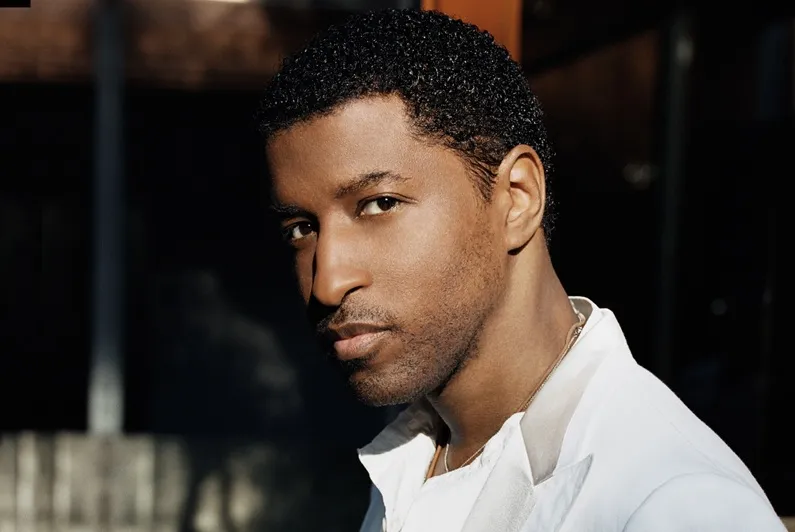

Babyface’s Top 10 Billboard Hits Ranked: Singer, Songwriter & Producer Classics
Kenneth “Babyface” Edmonds didn’t just contribute to the Billboard charts — he quietly dominated them.
If you slow-danced in the 1990s, cried through a breakup, dedicated a love song on late-night radio, or heard a wedding band attempt an impossible falsetto, you were living inside a Babyface composition.
As a singer, songwriter, and producer, Babyface helped define modern R&B. His fingerprints are all over the biggest Billboard hits of the 1990s and beyond. This list ranks his top 10 Billboard songs based on chart impact, cultural influence, and his creative role — whether behind the microphone, behind the mixing board, or behind the pen.
Let’s step inside the soundtrack of love.
1. “Change the World” – Eric Clapton (1996)
Role: Co-Writer & Producer
Billboard Peak: No. 5 (Hot 100)
Eric Clapton may not seem like obvious R&B territory, but Babyface’s songwriting crossed genres effortlessly.
“Change the World” blended adult contemporary polish with soulful sensitivity. The song won multiple Grammy Awards and became a global hit. Babyface proved here that emotional clarity travels well — whether sung by a blues-rock icon or an R&B crooner.
This wasn’t just a hit. It was cross-genre validation.
2. “Exhale (Shoop Shoop)” – Whitney Houston (1995)
Role: Writer & Producer
Billboard Peak: No. 1 (Hot 100)
Whitney Houston didn’t belt this one — she breathed it.
Babyface wrote “Exhale” with restraint in mind. It floats instead of soars. That minimalism allowed Whitney’s emotional nuance to shine. The song debuted at No. 1, a rare feat at the time, and became a defining ballad of mid-’90s R&B.
This is Babyface at his most elegant.
3. “I’ll Make Love to You” – Boyz II Men (1994)
Role: Writer & Producer
Billboard Peak: No. 1 (14 weeks)
Boyz II Men broke records with this slow jam.
Fourteen weeks at No. 1 on the Billboard Hot 100. That kind of dominance doesn’t happen by accident. Babyface understood harmony like architecture — he built songs that allowed vocal groups to shine without overwhelming them.
This wasn’t just a hit single. It became a cultural ritual — weddings, anniversaries, prom nights.
4. “End of the Road” – Boyz II Men (1992)
Role: Writer & Producer
Billboard Peak: No. 1 (13 weeks)
Before “I’ll Make Love to You,” there was this heartbreak anthem.
Thirteen weeks at No. 1. At the time, it set a record. Babyface took emotional devastation and turned it into lush, layered harmony. Released as part of the Boomerang soundtrack, the song defined early ’90s R&B balladry.
It proved slow songs could rule the charts.
5. “Breathe Again” – Toni Braxton (1993)
Role: Writer & Producer
Billboard Peak: No. 3 (Hot 100)
Toni Braxton had the voice — deep, smoky, unmistakable.
Babyface gave her the perfect torch song.
“Breathe Again” became one of the signature ballads of the decade. His songwriting carved space for Braxton’s contralto to ache and swell. It wasn’t overwrought. It was controlled longing — and that’s far more powerful.
6. “Take a Bow” – Madonna (1994)
Role: Co-Writer & Producer
Billboard Peak: No. 1 (7 weeks)
Madonna rarely relinquishes creative command.
But when she worked with Babyface on Bedtime Stories, magic happened.
“Take a Bow” became her longest-running No. 1 single in the United States. Babyface softened her edges, trading club energy for emotional maturity. The result was sophisticated pop restraint.
This is what happens when two masters meet in the middle.
7. “Can We Talk” – Tevin Campbell (1993)
Role: Writer & Producer
Billboard Peak: No. 9 (Hot 100)
Tevin Campbell was barely out of his teens.
Babyface wrote him a generational anthem.
“Can We Talk” became a No. 1 R&B hit and remains one of the most quoted hooks of the ’90s. It captured youthful hesitation and romantic courage in one simple phrase.
Few writers could make vulnerability sound this cool.
8. “Every Time I Close My Eyes” – Babyface (1996)
Role: Singer, Writer & Producer
Billboard Peak: No. 6 (Hot 100)
Here, Babyface stepped forward as the star.
Featuring background vocals from Mariah Carey, this track blended polished production with intimate delivery. It became a Top 10 hit and adult contemporary staple.
His falsetto doesn’t shout. It persuades.
9. “I’m Your Baby Tonight” – Whitney Houston (1990)
Role: Writer & Producer
Billboard Peak: No. 1 (Hot 100)
Before the ballads, Babyface helped Whitney pivot into contemporary R&B.
The track topped the Billboard Hot 100 and signaled a new era for Houston. It was slick, rhythmic, modern. Babyface knew how to update an artist’s sound without sacrificing identity.
That’s not just production. That’s vision.
10. “When Can I See You” – Babyface (1993)
Role: Singer, Writer & Producer
Billboard Peak: No. 4 (Hot 100)
An acoustic confession in a decade filled with lush production.
“When Can I See You” showcased Babyface’s ability to stand alone. No dramatic arrangement. No massive hook. Just guitar and honesty.
It earned Grammy recognition and proved he wasn’t just a behind-the-scenes architect — he was a compelling frontman.
Why Babyface Dominated the Billboard Charts
Babyface’s success wasn’t accidental. His approach combined three critical elements:
1. Emotional Precision
He wrote about love without cliché. Heartbreak without melodrama.
2. Vocal Framing
He understood how to build songs around voices — especially powerhouse singers like Whitney Houston and Toni Braxton.
3. Melodic Discipline
No unnecessary excess. Hooks that lingered. Bridges that mattered.
Throughout the 1990s, his production style defined mainstream R&B. Without Babyface, the sound of the decade shifts dramatically. His influence echoes in later producers and songwriters across pop, soul, and contemporary R&B.
The Billboard Legacy of Babyface
Charts measure numbers.
But Babyface measured feeling.
Multiple No. 1 singles. Record-breaking chart runs. Grammy wins. Cross-genre credibility. He shaped an era without chasing trends. Instead, trends followed him.
In the grand architecture of Billboard history, Babyface isn’t just another hitmaker.
He’s the quiet engineer behind modern love songs — the man who proved that softness can top the charts just as powerfully as spectacle.
And that may be his greatest hit of all.


