

The Voices That Defined R&B in the 90s
I’ve stood in arenas where the lights dropped to black and 20,000 people held their breath at the exact same moment. No phones glowing. No distractions. Just anticipation. And then a single note would rise from the stage — pure, human, trembling with promise — and the room would erupt.
That was 90s R&B.
It wasn’t background music. It was center stage. It was devotion and desire wrapped in harmony. It was gospel roots colliding with hip-hop drums. It was the last era before algorithms — when voices, not trends, ruled the charts.
Here are the voices that didn’t just participate in the decade — they defined it.
1. Whitney Houston – The Standard
By the ’90s, Whitney wasn’t chasing greatness. She was setting the bar for it. Her voice had that rare combination of technical mastery and spiritual surrender. When she opened her mouth, it felt like Sunday morning and Saturday night at the same time.
Ballads became events. Key changes became emotional plot twists. She sang with the certainty of someone who understood her gift was bigger than the room she was in. Every aspiring vocalist after her had to answer one silent question: Can you touch that?
Most couldn’t.
2. Mariah Carey – The Architect of Modern R&B Pop
Mariah didn’t just sing songs — she built cathedrals out of harmony. Layer upon layer of her own voice stacked into sonic skyscrapers. And that whistle register? It wasn’t just range. It was rebellion.
She fused R&B with hip-hop at a time when pop radio still kept them in separate rooms. Her collaborations and remixes rewrote the industry playbook. The melismatic runs that dominate singing competitions today? That’s her blueprint.
3. Mary J. Blige – The Truth Teller
Mary didn’t glide over pain. She walked straight through it.
There was grit in her tone, a lived-in honesty that made her records feel like diary entries set to drum machines. She helped invent hip-hop soul, blending street narratives with church-born phrasing. When she sang about heartbreak, you believed her. When she sang about survival, you felt stronger for it.
She made vulnerability fashionable.
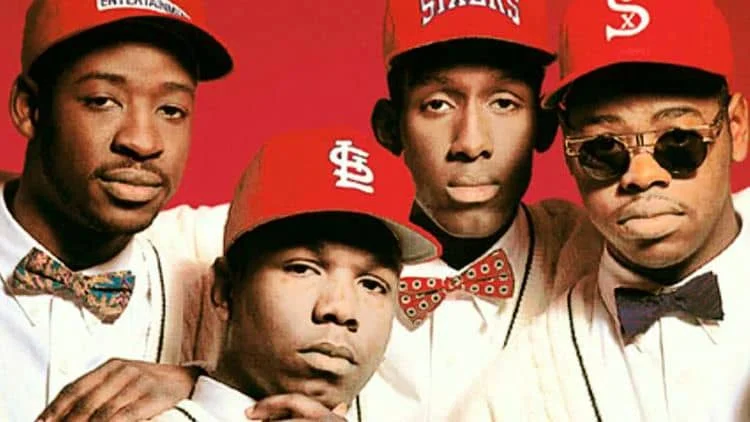
4. Boyz II Men – The Harmony Kings
If you slow-danced in the ’90s, odds are these four voices were playing somewhere in the background.
Their harmonies were surgical — tight, controlled, emotionally calibrated. They carried the doo-wop tradition into the modern era, proving that pure vocal interplay could still dominate radio. They turned love songs into generational anthems and reintroduced patience into R&B balladry.
5. TLC – The Attitude Shift
TLC didn’t just sing — they made statements.
They were playful, political, fearless. Their records tackled relationships, self-worth, and social responsibility without losing groove. Vocally, they weren’t about vocal gymnastics; they were about personality and phrasing. That conversational delivery changed how female R&B groups approached pop crossover.
They made empowerment sound cool.
6. Aaliyah – The Future in Real Time
Aaliyah didn’t overpower a track. She hovered over it.
Her voice was understated — cool, controlled, intimate. Paired with forward-thinking production, she helped push R&B into minimalist territory. Space became part of the rhythm. Restraint became seductive.
She proved that softness could be powerful.
7. R. Kelly – The Hitmaker (and Complicated Legacy)
It’s impossible to discuss 90s R&B without acknowledging his impact — and equally impossible to ignore the gravity of his controversies.
As a writer and producer, he reshaped the structure of modern R&B. His songwriting instincts were undeniable. He blended gospel progression with street narrative and radio-ready hooks in a way that defined late-90s soundscapes.
History has complicated his place in the canon, but his influence on the genre’s sonic framework is undeniable.
8. D’Angelo – The Neo-Soul Revivalist
When D’Angelo arrived, he slowed the pulse of the entire genre.
His approach felt analog in a digital world. Live instrumentation. Murky grooves. Vocals that felt half-whispered, half-prayed. He wasn’t chasing radio — he was chasing feeling.
He helped launch the neo-soul movement, bringing organic musicianship back into the R&B spotlight.
9. Lauryn Hill – The Poet
Lauryn blurred lines.
Singer. Rapper. Storyteller. Her phrasing felt conversational but devastatingly precise. She could deliver vulnerability and righteous fire within the same verse. She didn’t just sing about love — she interrogated it.
Her fusion of soul, hip-hop, and reggae expanded what R&B could contain emotionally and politically.
10. Brandy – The Vocal Technician
Brandy’s voice was velvet wrapped around steel control. Her stacked harmonies became a masterclass in background arrangement. Producers leaned into her ability to create atmosphere through subtle layering.
She influenced an entire generation of singers who studied her phrasing like sheet music.
11. Usher – The Performer
Usher emerged in the latter half of the decade with a different energy — youthful, kinetic, confident. He combined strong vocals with choreography and stage presence that nodded to R&B’s showman tradition.
He bridged the gap between classic soul crooners and the pop-dance hybrids that would dominate the 2000s.
12. En Vogue – The Precision Ensemble
En Vogue brought runway elegance to R&B.
Their harmonies were pristine. Their image polished but never distant. They revived the sophistication of classic girl groups while keeping the grooves contemporary. You could hear discipline in every note.
The Cultural Alchemy of the ’90s
What made the decade so potent wasn’t just talent. It was convergence.
Church-trained vocalists met hip-hop producers. Analog warmth met digital experimentation. Radio still mattered. Albums still unfolded like novels — intro tracks, interludes, slow builds.
Concerts felt communal. You didn’t watch through a screen; you locked eyes with the stage. You felt bass in your sternum. You sang along with strangers who suddenly felt like cousins.
The music reflected real life — romance, betrayal, faith, ambition, survival. It wasn’t algorithmic. It was human.
The Echo That Won’t Fade
Listen to today’s charts and you’ll hear the residue of the ’90s everywhere. The layered harmonies. The confessional tone. The blend of rap verses with melodic hooks. The emotional transparency.
Modern artists are still chasing that balance — polish without sterility, vulnerability without weakness, groove without gimmick.
The ’90s proved R&B could be commercially dominant and culturally authentic at the same time.
And maybe that’s why the era still feels sacred.
Because those voices weren’t just technically gifted. They were emotionally available. They sang like people who understood that music is memory — that somewhere, someone would tie their song to a first kiss, a final goodbye, a wedding dance, a long drive home alone.
I’ve seen crowds cry when those songs resurface decades later. I’ve watched arenas turn into choirs. And every time it happens, I’m reminded of something simple:
The 1990s didn’t just give us hits.
They gave us voices that still live in our bloodstream.
And that’s what defining a decade really sounds like.


